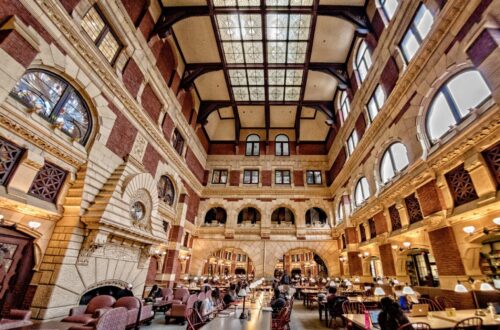


Introduction: Discovering the Legacy of UPenn 📚🏛️
The University of Pennsylvania (UPenn) is one of the most prestigious universities in the United States and a globally recognized leader in education, research, innovation, and community impact. Located in Philadelphia, Pennsylvania, UPenn has a rich history of academic excellence and continues to inspire students, researchers, entrepreneurs, and leaders from around the world. 🌍🎓
Founded in 1740 by statesman and inventor Benjamin Franklin, UPenn is known as one of the oldest universities in America. Franklin’s vision was to create an institution that combined practical knowledge with traditional education. This innovative approach helped shape UPenn’s identity as a university focused on creativity, problem-solving, and real-world impact.
Today, UPenn is recognized for its outstanding programs in business, medicine, law, engineering, communication, social sciences, and humanities. The university encourages students to explore different disciplines and connect ideas across fields.
With its commitment to discovery and leadership, UPenn continues to prepare students to address global challenges and create meaningful change. 💡🌎
🌟 The History and Founding Vision of the University of Pennsylvania
The story of UPenn begins with Benjamin Franklin’s belief that education should prepare individuals for practical contributions to society. Unlike many institutions of its time, Franklin promoted a modern approach that emphasized science, professional training, and useful knowledge.
In 1740, the institution began as a charitable school before developing into a college and eventually becoming the University of Pennsylvania. The university received its charter in 1755 and continued expanding its academic programs.
One of UPenn’s historic achievements was the creation of the first collegiate business school in the world, the Wharton School of the University of Pennsylvania, founded in 1881. This reflected the university’s commitment to preparing students for emerging fields and changing economic environments. 💼✨
Over the centuries, UPenn has continued to grow while maintaining its original spirit of innovation. The university has produced influential leaders in government, science, business, healthcare, arts, and technology.
Its historic campus combines traditional architecture with modern research facilities, creating an environment where history and innovation exist together.
📚 Academic Excellence and Diverse Educational Opportunities
UPenn offers a wide range of academic programs that encourage intellectual exploration and interdisciplinary learning. The university includes several highly respected schools, each offering specialized education and research opportunities.


🎓 College of Arts and Sciences
The College of Arts and Sciences provides students with a strong foundation in humanities, social sciences, and natural sciences.
Students study subjects such as:
📖 History and philosophy
🧠 Psychology
🌎 Political science
🔬 Biology and chemistry
📊 Economics
The college encourages critical thinking, creativity, and communication skills that help students succeed in many professional fields.
💼 The Wharton School
The Wharton School is one of the most famous business schools in the world. It is recognized for leadership education, entrepreneurship, finance, management, and innovation.
Students learn about:
📈 Business strategy
💰 Finance
🚀 Entrepreneurship
🌐 Global markets
📊 Data analytics
Wharton’s connection to industry and entrepreneurship provides students with opportunities to develop practical skills and build professional networks.
Many graduates become business leaders, founders, investors, and innovators who influence industries worldwide.
🏥 Perelman School of Medicine
The Perelman School of Medicine is one of the oldest medical schools in the United States and is known for excellence in healthcare education and biomedical research.
Students and researchers work on important areas such as:
🧬 Genetics
🧠 Neuroscience
💊 Medical treatments
🏥 Healthcare innovation
The school combines scientific research with patient care to improve medicine and healthcare systems.
⚙️ School of Engineering and Applied Science
UPenn’s engineering programs focus on technology, innovation, and solving complex problems.
Students explore fields including:
💻 Computer science
🤖 Artificial intelligence
⚡ Electrical engineering
🧮 Data science
🔬 Biotechnology
Engineering researchers collaborate with experts from medicine, business, and science to create solutions that impact society.
🔬 Research and Innovation at UPenn
Research is a central part of the University of Pennsylvania’s mission. Faculty members and students participate in discoveries that influence science, technology, healthcare, and society.


UPenn research covers many important areas, including:
🧬 Biomedical discoveries
🤖 Artificial intelligence
🌱 Sustainability
🧠 Neuroscience
📱 Digital technology
🌎 Social innovation
The university encourages collaboration between different academic fields. Researchers from engineering, medicine, business, and social sciences often work together to solve complex problems.
For example, medical researchers may collaborate with computer scientists to improve healthcare technology, while business experts may help transform discoveries into practical solutions.
This interdisciplinary approach allows UPenn to remain a leader in innovation.
🌎 UPenn’s Global Impact and Community Engagement
The University of Pennsylvania has a strong commitment to making a positive impact beyond its campus. Through research, education, and community partnerships, UPenn works to address important challenges around the world.
Students participate in:
🌍 International programs
🤝 Community service projects
📚 Educational outreach
💡 Entrepreneurship initiatives
The university believes that knowledge should be used to improve society. Students are encouraged to become responsible leaders who contribute to their communities.
Philadelphia also provides a unique learning environment. As one of America’s most historic cities, it offers students opportunities to engage with culture, business, healthcare organizations, and public institutions.
🏫 Student Life at UPenn: Learning Beyond the Classroom
Life at UPenn extends far beyond academic studies. The university offers a vibrant campus experience where students can explore interests, build friendships, and develop leadership skills.
Students participate in:
🎭 Arts and cultural organizations
🏅 Athletic programs
🌱 Sustainability groups
💻 Technology clubs
🤝 Volunteer activities
Campus organizations allow students to connect with others who share similar interests while gaining valuable teamwork and leadership experience.
The university’s diverse community creates an environment where students learn from each other and develop lifelong connections.