India is placing increasing importance on innovation, creativity and technology-driven education. Encouraging young students to think beyond traditional classroom learning has become an important part of preparing the next generation for future challenges.
In an exciting development for aspiring innovators, the Education Ministry’s SEVA Innovation Challenge is attracting attention with an opportunity for young minds to develop creative solutions and compete for financial rewards of up to Rs 10 lakh.
The challenge highlights the importance of student-led innovation and encourages participants to transform their ideas into practical solutions that can benefit society.
For school students, young researchers and aspiring entrepreneurs, innovation competitions can provide an opportunity to explore their interests, demonstrate their abilities and gain recognition for their work.
Rather than limiting education to textbooks and examinations, initiatives of this kind encourage students to identify real-world problems, experiment with possible solutions and develop the confidence to present their ideas.
The possibility of winning a significant financial award makes the opportunity particularly attractive. However, the larger purpose of such competitions is to build an innovation-oriented educational environment where creativity, problem-solving and independent thinking receive greater attention.
🎓 What Is the SEVA First Innovation Challenge 2026?
The SEVA First Innovation Challenge, also known as SFIC 2026, is an initiative designed to encourage young people to identify real problems in their communities and develop practical solutions.
The challenge was inaugurated on September 25, 2026, by Union Education Minister Pralhad Joshi at the Indian Institute of Science (IISc), Bengaluru.
It brings together students from schools, Industrial Training Institutes (ITIs), polytechnics, colleges and universities.
The initiative is being organised jointly by the Union Ministry of Education, the All India Council for Technical Education (AICTE) and the University Grants Commission (UGC), with IISc Bengaluru serving as the nodal institute. Press Information Bureau+1
The central idea behind the programme is to connect education with real-world problem-solving.
Students are encouraged to observe challenges in their surroundings, investigate their causes and propose innovative solutions that can be tested and potentially implemented.
For example, a school student might develop a low-cost system to reduce water wastage. An engineering student could explore an affordable agricultural monitoring device. A university research team might develop technology to improve healthcare access in remote communities.
These examples demonstrate the type of practical thinking the initiative seeks to encourage; they are illustrative ideas rather than confirmed winning entries.
The programme also aims to create opportunities for promising ideas to receive mentorship, technical guidance, incubation and testing support.
This makes the challenge more than a conventional student competition. It is designed to help young innovators move from identifying a problem to developing a solution that can make a difference.
💰 Win Up to Rs 10 Lakh: Understanding the Prize Structure
One of the biggest attractions of the SEVA First Innovation Challenge is its financial reward.
According to the reported award structure, winners in each of the five national themes can receive the following prizes:
₹10 lakh
First prize
₹5 lakh
Second prize
₹3 lakh
Third prize
Awards are listed for each theme on the challenge information page. Check the official guidelines for category-specific conditions.
These awards are intended to recognise innovative thinking and encourage young people to develop their ideas further.
For students, the financial reward can be an important source of motivation. Developing a prototype, conducting experiments and testing a proposed solution can require resources that may not always be available in educational institutions.
However, the benefits extend beyond prize money.
Selected innovators may receive access to expert mentors, laboratories, fabrication facilities, incubation opportunities and support for pilot projects.
Such opportunities can help students improve their concepts and understand the practical requirements of bringing an innovation into the real world. Jagran Josh+2
👩🎓 Who Can Apply for the SEVA Innovation Challenge?
The competition includes three participation levels designed for students from different educational backgrounds.
Junior Category
Students studying in Classes 6 to 12 can participate in this category. They can identify local problems and suggest practical solutions. A working prototype is encouraged but is not compulsory.
Technical Category
Students enrolled in ITIs and polytechnic institutions can develop ideas involving engineering, fabrication, electronics and process improvements.
Open Category
Undergraduate and postgraduate students, along with research scholars, can submit demonstrated prototypes or pilot projects with a clear implementation plan.
This three-level structure allows participants to contribute according to their educational experience and technical capabilities.
A Class VI student might present a simple idea for improving waste segregation in their school, while a postgraduate researcher could propose a more advanced technological solution to an environmental challenge.
The expectations are different, but both approaches encourage creativity and practical problem-solving.
An important detail is that registration is institution-led. Individual students cannot register directly. Schools, colleges and other eligible institutions must register and nominate participants through their designated coordinators. India Today+1
🌱 Five Major Innovation Themes Students Should Know About
The SEVA First Innovation Challenge focuses on five themes connected with India’s development priorities.
Clean and Sustainable Bharat 🌍
Environmental sustainability is an important area for innovation.
Students can explore problems related to pollution, waste management, water conservation, renewable energy and sustainable lifestyles.
Potential project ideas include low-cost water monitoring systems, waste segregation devices, energy-saving solutions and technologies that support recycling.
The main objective is to develop ideas that help protect natural resources while improving everyday life.
Prosperous Farmers, Prosperous Bharat 🌾
Agriculture supports millions of Indian families, making farming-related innovation particularly important.
Students can explore ways to improve agricultural productivity, reduce unnecessary resource consumption and make farming more efficient.
Possible areas include smart irrigation, affordable crop monitoring, soil analysis, weather information systems and post-harvest storage.
Innovations should consider the practical needs and financial circumstances of farmers.
Healthy and Inclusive Bharat ❤️
Healthcare access and inclusion are essential for social development.
This theme encourages solutions that can improve healthcare services, accessibility and the well-being of different communities.
Students might explore assistive technologies, affordable health monitoring devices, digital healthcare services and tools that support people with disabilities.
The emphasis should be on practical solutions that address genuine healthcare and inclusion challenges.
Educated and Skilled Bharat 📚
Education and skill development are essential for preparing young people for the future.
Students can propose ideas that improve classroom experiences, educational accessibility and vocational training.
Examples include affordable learning devices, digital learning platforms, tools for students with disabilities and innovative methods of teaching technical skills.
The theme encourages young people to consider how education can become more accessible and effective.
Secure Bharat 🛡️
Safety and security are increasingly important in both physical and digital environments.
Students can investigate challenges involving cybersecurity awareness, public safety, disaster preparedness and protection of essential infrastructure.
Possible concepts include digital safety education tools, emergency communication systems and practical solutions for improving community preparedness.
These five themes provide broad opportunities for students with interests in science, engineering, social development, entrepreneurship and technology. Press Information Bureau+1
💡 Two Innovation Tracks: Product Solutions and Governance Ideas
The challenge recognises that innovation does not always mean inventing a physical machine or developing advanced software.
Participants can submit their proposals through two different tracks.
Product and Technology Solutions
This track focuses on practical products, devices, software applications and engineering-based innovations.
Students interested in technology can develop prototypes, demonstrate how their ideas work and explain the problems they are designed to solve.
Examples include:
- Smart water conservation devices.
- Affordable agricultural monitoring systems.
- Assistive technology for people with disabilities.
- Digital platforms for educational support.
- Low-cost environmental monitoring equipment.
Business Model and Governance Solutions
This track focuses on improving services, administrative processes and institutional systems.
Not every problem requires a new machine. Sometimes, improving how an existing service operates can create significant benefits.
For example, students might propose a better system for managing school resources, improving access to public services or reducing delays in local administrative processes.
This track encourages participants to think about efficiency, accessibility, affordability and practical implementation.
Both tracks offer opportunities for students with different interests and educational backgrounds. India Today+1
📝 How to Register for the SEVA First Innovation Challenge 2026
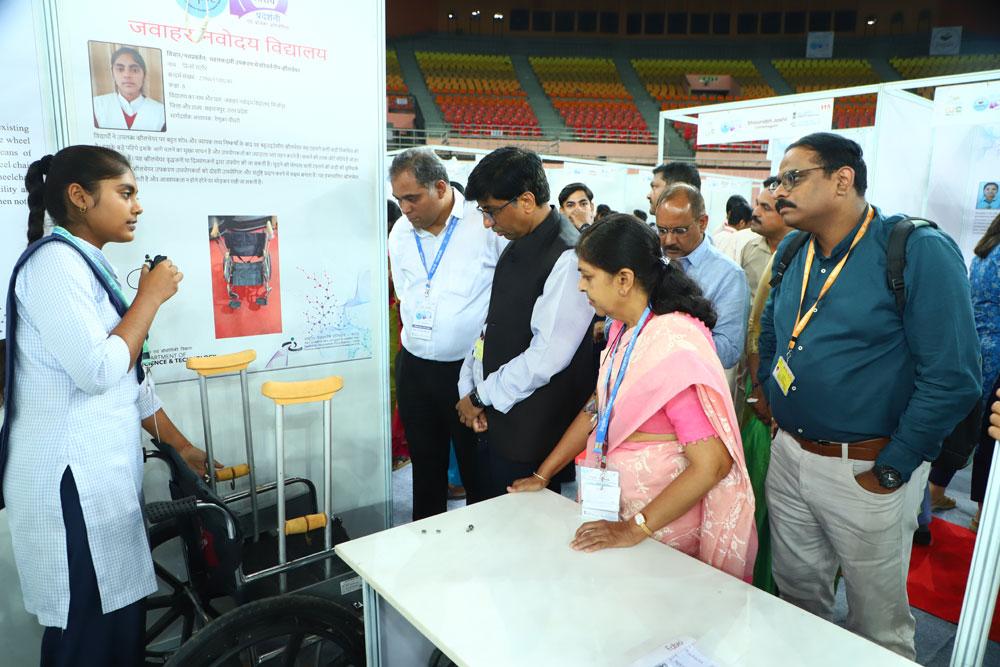
Students interested in participating should first contact their school, college or educational institution.
Since registration is institution-led, the institution must complete its registration and nominate students through its authorised coordinator.
The general registration process is as follows:
- Visit the official SEVA First Innovation Challenge website: sevafirst.mic.gov.in.
- Select the institution registration option.
- Enter the required institutional information, including the UDISE or AISHE identification number, where applicable.
- Provide the details of the nominated institutional coordinator.
- Verify the account using the eight-digit code sent to the institution’s official email address.
- After account activation, the coordinator can nominate eligible students.
- Submit the innovation proposals under the appropriate participation category, theme and track.
Students should coordinate with their institution well before the submission deadline to avoid last-minute problems.
Important: The competition’s registration is not an individual student application process. Students should ask their institutional coordinator about the nomination procedure and required supporting documents. India Today+1
📅 Important Dates and Registration Deadline
The Ministry of Education’s challenge has an important updated deadline that interested institutions should carefully check.
SEVA First Innovation Challenge 2026
Deadline extended
Official launch
September 25, 2026
Registration and submission deadline
November 6, 2026
Screening
From November 7, 2026 onwards
Showcase and finale window
November 30 – December 15, 2026
The later programme dates are indicative and subject to formal confirmation.Visit official registration portal
The November 6 deadline is the extended submission date reported on November 2, 2026. The initial deadline was October 24.
Geographical eligibility: The currently reported South Zone edition covers Karnataka, Tamil Nadu, Kerala, Andhra Pradesh, Telangana, Puducherry, Andaman and Nicobar Islands, and Lakshadweep. Students should verify their institution’s eligibility and the applicable regional participation guidelines on the official portal. India Today+2
🔍 How Will Student Innovation Projects Be Evaluated?
A successful innovation competition needs a transparent evaluation process.
The SEVA First Innovation Challenge considers several important aspects of a proposed solution.
Problem identification: Does the project address a genuine problem faced by people, communities or institutions?
Originality: Does the idea offer a fresh approach or meaningful improvement over existing solutions?
Feasibility: Can the proposed solution realistically be developed and implemented?
Cost effectiveness: Is the idea affordable and practical for its intended users?
Potential impact: Could the innovation create meaningful benefits for society?
Scalability: Can the solution be expanded to reach more people or address similar problems in other locations?
The official challenge timeline identifies NITs and designated technical institutions as part of the screening process.
The evaluation process is designed to identify proposals that combine creativity with practical relevance.
This means students should explain not only what their idea does but also why it matters, how it could work and who would benefit from it. Seva First Innovation Challenge+1
🧪 Why Prototypes and Practical Experiments Matter
An innovative idea becomes more convincing when students can demonstrate how it might work.
A prototype is an early version of a product or solution that allows its creators to test important features.
For example, students developing a water-saving device could build a simple model showing how water flow can be monitored or controlled.
A group working on an agricultural project might develop a basic soil-monitoring system using affordable electronic components.
Students interested in education technology could create a demonstration application showing how learners can access educational resources more easily.
These experiments help young innovators understand the difference between theoretical ideas and practical implementation.
They also create opportunities to discover technical problems, improve designs and learn from unsuccessful experiments.
For students in the Junior category, a working prototype is encouraged but not compulsory. Participants can submit well-reasoned ideas and practical service or governance solutions.
The Technical and Open categories place greater emphasis on engineering demonstrations, prototypes and pilot projects.
This distinction allows the competition to recognise innovation at different educational stages.
🌟 How the SEVA Challenge Can Help Young Entrepreneurs
The SEVA First Innovation Challenge could become an important learning opportunity for students interested in entrepreneurship.
Many successful businesses begin with a simple observation: a problem exists, and people need a better way to solve it.
However, transforming an idea into a successful product or service requires more than creativity.
Young innovators need to understand their users, research existing solutions, estimate costs, test their concepts and communicate their ideas effectively.
Innovation challenges can provide an early introduction to these processes.
The mentorship and incubation opportunities associated with SEVA may help selected participants understand how to develop their proposals further.
Students can also gain experience in presenting ideas to experts, receiving feedback and improving their work.
These experiences may prove useful even for participants who do not win a financial award.
For aspiring entrepreneurs, learning how to identify a real customer problem and create an affordable solution is an important foundation.
The possibility of connecting promising projects with government departments, public sector organisations and industry partners adds another dimension to the initiative.
It creates a potential pathway through which student innovations can move beyond classroom demonstrations towards real-world applications.
🤖 The Growing Role of Artificial Intelligence in Student Innovation
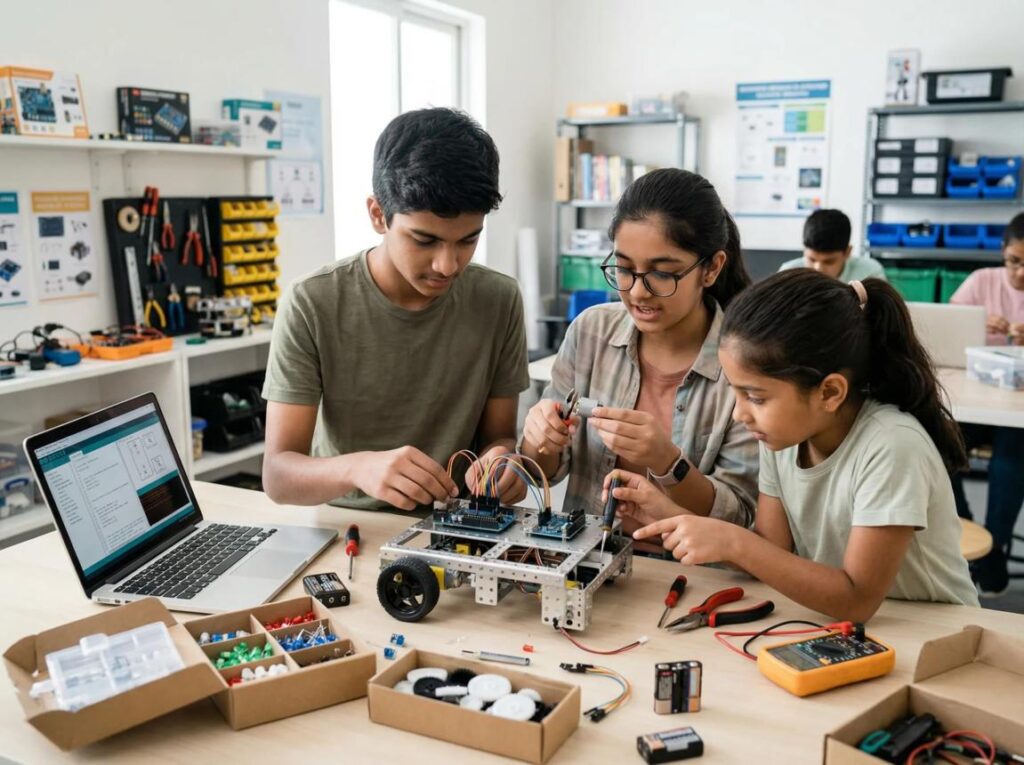
Artificial intelligence is changing the way people approach education, research, engineering and business.
Students can now explore AI-powered tools to understand technical concepts, organise research and experiment with possible solutions.
For example, AI can help young innovators analyse agricultural information, explore educational accessibility and investigate environmental challenges.
However, students should understand that AI is a supporting tool rather than a replacement for original thinking.
An innovation project should demonstrate the student’s own understanding of the problem and proposed solution.
Participants can use technology responsibly to research existing approaches, prepare presentations and improve their prototypes.
They should also verify information, protect personal data and clearly explain how any AI-based system works.
The future of innovation will require students who can combine technical knowledge with creativity, critical thinking and social responsibility.
Competitions such as SEVA provide an opportunity to develop these abilities through practical projects.
🌍 Why Community-Based Innovation Is Important for India’s Future
India faces many challenges that require affordable, scalable and locally relevant solutions.
Access to clean water, agricultural productivity, healthcare facilities, environmental protection and educational opportunities are among the areas where innovation can make a difference.
Students often have direct experience of these challenges because they live in the communities affected by them.
A student in a rural area may notice problems with water availability. Someone living in a city may observe difficulties involving waste management or traffic safety.
A student with an interest in education might identify barriers that prevent children from accessing quality learning resources.
These observations can become the starting point for meaningful innovation.
Community-based innovation also teaches students to understand the needs of different people.
A solution that works in one location may not automatically work elsewhere. Innovators must consider local conditions, affordability, infrastructure and user requirements.
This practical understanding is essential when developing solutions intended to benefit society.
The SEVA initiative encourages young people to connect their educational knowledge with the needs of their surroundings.
This is particularly relevant to India’s broader development ambitions and the vision of Viksit Bharat @ 2047.
🎯 Practical Tips for Students Preparing Their Innovation Proposals
Students interested in participating should focus on developing a clear and realistic proposal.
Here are some useful preparation tips:
- Start with a real problem: Identify an issue that affects people in your school, neighbourhood or community.
- Research existing solutions: Understand what has already been developed and identify opportunities for improvement.
- Keep the idea practical: Choose a solution that can be explained and developed with available resources.
- Explain the benefits: Describe who will use the innovation and how it could help them.
- Consider affordability: A low-cost solution can sometimes be more useful than an expensive and complicated product.
- Prepare supporting materials: Include diagrams, photographs, research findings or prototype demonstrations where appropriate.
- Work as a team: Collaborate with classmates and teachers when developing and testing your idea.
- Seek feedback: Ask teachers, technical experts and potential users to review your proposal.
- Follow official guidelines: Check the appropriate category, theme, track and submission requirements.
Most importantly, students should avoid submitting an idea simply because it sounds technologically advanced.
A simple solution that addresses a genuine problem can be more valuable than a complicated project without a clear purpose.
❤️ Conclusion: A Big Opportunity for India’s Next Generation of Innovators
The Education Ministry’s SEVA First Innovation Challenge 2026 offers an exciting opportunity for young people to demonstrate their creativity, technical abilities and commitment to solving real-world problems.
With prizes of up to Rs 10 lakh, five major innovation themes and three participation categories, the initiative encourages students from different educational backgrounds to explore practical solutions.
The additional benefits of mentorship, laboratory access, incubation and potential implementation support make the competition particularly interesting for aspiring innovators.
The extended November 6, 2026 registration deadline also gives eligible educational institutions additional time to nominate students and prepare proposals.
However, the true significance of this initiative goes beyond financial rewards.
It encourages students to become problem-solvers rather than passive learners. It shows them that classroom knowledge can be applied to challenges affecting society.
A simple idea developed by a school student today could eventually inspire a useful product, a new service or a solution that benefits thousands of people.
India’s next major innovation could begin with a young student asking one simple question: How can I make this better? 🚀🇮🇳