

The University of Pennsylvania, commonly known as Penn or UPenn, is one of the most recognized universities in the United States. Located in Philadelphia, Pennsylvania, the university combines a long academic tradition with an innovative approach to education, research, entrepreneurship, and community engagement. 🎓✨
For students around the world, UPenn represents an opportunity to study in an intellectually ambitious environment where different academic disciplines frequently intersect. Its schools cover areas ranging from business and engineering to medicine, nursing, law, education, communication, and the liberal arts.
What makes UPenn especially interesting is its emphasis on connecting knowledge with practical applications. Students are encouraged not only to learn theories but also to consider how those ideas can address challenges in business, technology, healthcare, society, and the wider world. 🌎💡
1. A Look at UPenn’s History and Academic Tradition 📚
The history of the University of Pennsylvania is closely connected with Benjamin Franklin, whose ideas about practical education helped shape the institution’s early philosophy. Unlike an educational model focused exclusively on classical studies, the vision associated with Franklin emphasized useful knowledge and preparation for real-world challenges.
Over time, UPenn developed into a comprehensive research university with a broad collection of undergraduate, graduate, and professional programs. Its development reflects the changing nature of higher education in the United States, particularly the growing importance of scientific research, professional education, and interdisciplinary collaboration.
Today, UPenn is a member of the Ivy League, a group of highly established American universities known for their academic traditions and competitive educational environments. 🏛️
The university’s historical identity remains visible across its Philadelphia campus. Historic buildings stand alongside modern academic and research facilities, creating an environment where tradition and contemporary innovation coexist.
This combination can be particularly appealing to students who appreciate an institution with a strong historical foundation while also looking toward emerging fields.
UPenn’s academic culture is also influenced by Philadelphia itself. As one of America’s major cities, Philadelphia provides students with opportunities to explore museums, cultural institutions, healthcare organizations, businesses, nonprofit organizations, and research communities beyond the university campus.
For students, education therefore does not necessarily stop at the classroom door. The city can become an extension of the learning environment. 🚶♀️📖
2. Academic Opportunities Across Many Disciplines 🎓🔬
One of UPenn’s major strengths is the diversity of its academic schools and programs. Students can explore subjects in the humanities, social sciences, natural sciences, engineering, business, healthcare, education, communication, and numerous professional fields.
The university is particularly well known for encouraging connections between disciplines. A student interested in technology and business, for example, may find opportunities to explore both areas rather than treating them as completely separate subjects.
This interdisciplinary approach can be valuable because many modern challenges do not fit neatly into one academic category.
Consider artificial intelligence. 🤖
Developing effective AI systems involves computer science and mathematics, but successful implementation may also require knowledge of economics, psychology, healthcare, ethics, communication, and public policy.
Similarly, healthcare innovation involves medicine and biology but can also benefit from engineering, data science, business, design, and social science.
UPenn’s broad academic structure creates an environment where students can encounter these connections.
The university’s undergraduate education also provides students with opportunities to develop broad intellectual interests. Rather than viewing education simply as professional preparation, students can explore questions about history, culture, society, science, technology, and human behavior.
For graduate and professional students, UPenn offers another dimension of academic specialization. Advanced programs allow students to develop expertise while working alongside faculty and researchers engaged in complex projects.
This combination of breadth and specialization is an important part of the university’s educational identity. 📚✨


3. The Wharton School and Business Education 💼📈
One of UPenn’s most internationally recognized academic institutions is the Wharton School, which has played a major role in the development of modern business education.
Wharton attracts students interested in finance, management, entrepreneurship, marketing, economics, analytics, and other areas of business.
Business education at a major research university can offer students more than traditional classroom instruction. Students may have opportunities to analyze real-world cases, participate in entrepreneurial activities, work on projects, join student organizations, and interact with professionals.
Entrepreneurship is especially relevant in today’s economy. Technology has lowered barriers for creating new businesses, while digital platforms have transformed how companies communicate with customers and operate internationally. 🚀
Students interested in entrepreneurship can therefore benefit from an environment where business ideas can be discussed from multiple perspectives.
A technology-focused student might approach a startup by asking whether a product can be built. A business student might focus on the market opportunity. A social science student might examine how people will respond to the product. An ethics-focused researcher might consider its broader social consequences.
When these perspectives come together, students can develop a more complete understanding of entrepreneurship.
Wharton’s influence also extends beyond traditional business careers. Business knowledge can be useful for people working in healthcare, technology, nonprofit organizations, government, education, and creative industries.
Understanding budgets, organizational behavior, leadership, markets, and strategy can help professionals make informed decisions in many different settings.
For students interested in careers where business intersects with technology or social impact, UPenn’s broader academic environment can be particularly valuable. 💡
4. Research, Innovation, and Technology 🔬🤖
Research is another central part of UPenn’s identity.
Universities like UPenn contribute to society by creating environments where researchers can investigate questions that may not have immediate answers. Some research focuses on fundamental scientific questions, while other projects aim to develop practical technologies, improve healthcare, understand social behavior, or address environmental challenges.
Technology has become particularly important across modern university research.
Artificial intelligence, machine learning, robotics, biotechnology, data science, cybersecurity, and digital communication are changing the research landscape. Students can increasingly encounter these technologies regardless of their primary academic discipline.
For example, a healthcare researcher may use data analytics to identify patterns in patient outcomes. An economist may use computational models to examine markets. A linguist may study natural-language technologies. An engineer may develop systems for healthcare or environmental applications.
The value of interdisciplinary research comes from bringing these perspectives together. 🧠🔗
Research can also teach students skills that extend beyond a specific subject.
Students involved in research may learn how to formulate questions, evaluate evidence, interpret data, communicate findings, work collaboratively, and deal with uncertainty.
These skills can remain useful throughout a professional career.
UPenn’s research environment also contributes to the university’s relationship with the broader Philadelphia community. Academic research can connect with hospitals, businesses, public organizations, technology companies, and nonprofit institutions.
This creates possibilities for knowledge to move between universities and society rather than remaining exclusively within academic settings.
5. Student Life and the Campus Experience 🧑🎓🌳
University life involves much more than lectures, examinations, and assignments.
For many students, campus life becomes an important part of their personal development. UPenn provides a large community in which students can participate in organizations, events, cultural activities, athletics, leadership programs, and social groups.
Student organizations can allow individuals to explore interests outside their major.
A student studying economics might join a cultural organization. An engineering student might participate in a debate group. A biology student could become involved with a community-service organization.
These experiences can help students meet people with different backgrounds and interests.
Campus activities can also contribute to leadership development. Organizing an event, managing a student organization, coordinating volunteers, or leading a project requires communication and planning skills.
Such experiences can be valuable when students later enter professional environments. 🌟
Another important part of university life is learning how to manage independence.
Students often need to balance academic responsibilities with social activities, extracurricular commitments, personal health, and long-term career planning.
This process can be challenging, but it can also help students develop organizational habits and self-awareness.
The campus environment provides a physical setting for these experiences. Historic architecture, academic buildings, libraries, student spaces, and green areas contribute to the character of the university.
Philadelphia also provides students with opportunities beyond campus. Museums, restaurants, cultural events, public spaces, professional organizations, and community programs create additional possibilities for exploration.

6. Learning in the City of Philadelphia 🌆📍
Location matters when considering a university.
UPenn’s Philadelphia setting gives students access to an urban environment with a long history and diverse economy.
Philadelphia is known for its historical significance in American history, but the city is also home to universities, hospitals, research institutions, technology companies, cultural organizations, financial institutions, and nonprofit organizations.
For students, this creates opportunities to learn from the surrounding community.
An architecture student can observe different architectural styles across the city. A political science student can explore the history of American government and civic institutions. A medical student can encounter a major healthcare ecosystem. A business student can study organizations operating in an urban economy.
City life can also help students develop practical skills.
Navigating public transportation, managing time, exploring unfamiliar neighborhoods, attending professional events, and interacting with diverse communities can all contribute to personal growth.
At the same time, living in a city requires responsibility. Students need to learn how to balance exploration with academic priorities and personal safety.
The urban environment therefore becomes another learning experience.
Philadelphia also offers cultural diversity. Students from different backgrounds can encounter communities with different traditions, languages, foods, artistic expressions, and social perspectives.
This can broaden students’ understanding of the world. 🌎❤️
7. Preparing Students for Professional Careers 💼🎯
A major reason students attend universities is to prepare for future careers.
UPenn’s wide range of academic programs allows students to explore many professional directions. Some graduates pursue careers in business and finance, while others enter technology, medicine, law, research, education, public service, consulting, communications, or entrepreneurship.
Career preparation can involve several components.
First, students develop subject-specific knowledge. An engineering student needs technical understanding, while a future educator needs knowledge about learning and development.
Second, students need transferable skills.
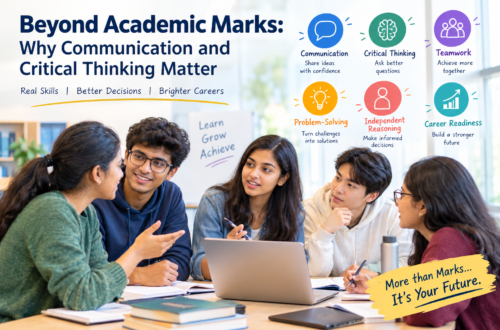
Communication, teamwork, problem-solving, research, writing, presentation, and critical thinking are valuable across almost every profession.
Third, students benefit from understanding professional environments.
Internships, projects, research experiences, networking events, student organizations, and career programs can help students connect academic learning with professional expectations.
The transition from university to employment is not always straightforward. Careers change, industries evolve, and new technologies create professions that may not have existed when students began their education.
This is why adaptability is increasingly important. 🔄
A strong university education should ideally help students learn how to continue learning.
For example, someone entering technology may need to update their skills as software and AI systems evolve. Someone working in healthcare may encounter new treatments and technologies. A business professional may need to understand new economic models and digital platforms.
Lifelong learning therefore becomes a central part of career development.
8. Innovation and Entrepreneurship at UPenn 🚀💡
Innovation is often associated with technology, but innovation can occur in many forms.
A new medical treatment is an innovation. A more efficient educational method can be an innovation. A new business model, public policy approach, software platform, or community program can also represent innovation.
UPenn’s academic diversity provides an environment where students can think about innovation from multiple perspectives.
Entrepreneurship can be especially attractive to students who want to transform ideas into organizations or products.
Starting a company requires more than having an interesting idea. Entrepreneurs need to understand customers, finances, operations, communication, competition, technology, and risk.
University environments can provide a relatively safe space for students to explore these questions.
Students can test ideas through competitions, projects, clubs, courses, research, and conversations with experienced professionals.
Even when an entrepreneurial project does not become a successful company, the experience can teach important lessons.
Students may learn how to identify a problem, conduct research, create a proposal, present an idea, receive criticism, revise a plan, and collaborate with others.
These are useful skills in many careers. 🧩
Innovation also involves failure.
A project may not work as expected. A research hypothesis may be incorrect. A business idea may not attract customers.
Learning how to respond to setbacks is therefore an important part of entrepreneurial education.
9. Diversity, Collaboration, and Global Perspectives 🌍🤝
Modern universities bring together people from different backgrounds, cultures, academic disciplines, and professional ambitions.
This diversity can make the learning experience richer.
Students may encounter classmates who grew up in different countries or communities and have different approaches to education, communication, and problem-solving.
Working with people who think differently can sometimes be challenging, but it can also encourage students to reconsider assumptions.
Collaboration is particularly important in research and professional environments.
A complex project may require a programmer, designer, business specialist, researcher, communicator, and subject-matter expert.
Learning how to work effectively with people from different disciplines is therefore an increasingly valuable skill.
Global perspectives are also important because many challenges cross national borders.
Climate change, infectious diseases, cybersecurity, artificial intelligence, economic development, migration, and international trade all involve interconnected systems.
Universities have an opportunity to help students understand these connections.
For international students, studying at UPenn can also provide an opportunity to experience American higher education while developing relationships with people from around the world.
For domestic students, interacting with international classmates can provide valuable exposure to different cultures and perspectives. 🌎✨
10. Libraries, Resources, and Independent Learning 📖💻
A university’s resources can strongly influence the student experience.
Libraries remain important even in an age when information is widely available online. Academic libraries provide access to books, journals, databases, archives, study environments, research assistance, and specialized collections.
However, modern university learning goes beyond physical books.
Students increasingly use digital databases, academic software, online research platforms, data-analysis tools, collaboration systems, and multimedia resources.
The key challenge is not simply finding information but evaluating it.
The internet contains enormous amounts of information, but not all information is accurate or trustworthy.
Students need to develop information literacy: the ability to identify reliable sources, compare evidence, recognize misleading claims, and understand the difference between opinion and research.
This skill has become especially important with the rapid growth of generative AI. 🤖📱
AI tools can help students brainstorm, summarize, analyze, or explore ideas, but students must understand their limitations.
Responsible academic work requires students to verify information, follow university policies, protect personal data, and maintain intellectual honesty.
The broader lesson is that technology should support learning rather than replace critical thinking.
11. The Importance of Critical Thinking 🧠✨
Critical thinking is one of the most transferable skills a university can develop.
It involves asking questions, examining evidence, considering alternative explanations, identifying assumptions, and reaching conclusions based on reason.
These abilities are useful in almost every area of life.
Consider a student reading an article online. Instead of immediately accepting its claims, the student can ask:
Who produced this information?
What evidence is presented?
Are other sources saying something different?
Is the information current?
Could the author have a particular financial or ideological interest?
These questions are simple but powerful.
Critical thinking also matters in professional environments.
Managers need to evaluate proposals. Engineers need to assess technical solutions. Doctors need to interpret medical evidence. Researchers need to examine experimental results. Journalists need to verify claims.
A university education can provide opportunities to practice these skills through discussions, essays, research projects, laboratory work, presentations, and collaborative assignments.
The goal is not simply to memorize information.
The goal is to understand how knowledge is created, evaluated, communicated, and applied. 📚🔍
12. Building a Meaningful University Experience 🌟
Attending a university such as UPenn can provide significant academic opportunities, but students ultimately shape much of their own experience.
A successful university journey does not necessarily mean joining every organization, taking the largest possible course load, or pursuing the most prestigious career.
Instead, students can focus on developing meaningful goals.
One student may prioritize research. Another may focus on entrepreneurship. Someone else may want to become a community leader, educator, healthcare professional, engineer, or artist.
The important question is how academic opportunities connect with personal interests and long-term aspirations.
Students can also benefit from developing relationships with professors, advisors, classmates, alumni, and professional mentors.
Networking is sometimes misunderstood as simply collecting contacts. Meaningful networking is more about building genuine professional relationships based on curiosity, respect, and shared interests.
Mentors can provide advice about academic choices, internships, graduate school, careers, and professional development.
Peer relationships can be equally valuable.
Classmates may eventually become colleagues, collaborators, entrepreneurs, researchers, or lifelong friends. 🤝
13. Why UPenn Continues to Attract Students 🎓🌎
The University of Pennsylvania’s appeal comes from a combination of factors.
Its Ivy League identity provides a strong historical and academic reputation. Its broad collection of schools offers opportunities across many disciplines. Its research environment supports innovation. Its Philadelphia location creates connections with an urban community.
Perhaps most importantly, UPenn offers an environment where different forms of knowledge can interact.
Business can meet technology.
Medicine can meet engineering.
Education can meet psychology.
Data science can meet social science.
Entrepreneurship can meet research.
These intersections reflect the complexity of the modern world.
Students increasingly need more than expertise in one narrow area. They need to communicate across disciplines, adapt to changing technologies, evaluate information, and understand how their work affects broader society.
UPenn’s multidisciplinary environment can help students explore these connections.
Of course, university life also involves challenges. Academic expectations can be demanding, and students must manage workloads, responsibilities, finances, relationships, and personal well-being.
Choosing a university should therefore involve careful consideration of academic interests, financial circumstances, location, campus culture, available programs, and personal goals.
Prestige alone should not determine the decision.
The best university is one where a student can learn, grow, build meaningful relationships, and prepare for the future.
14. Looking Toward the Future 🚀🌐
Higher education is changing rapidly.
Artificial intelligence is transforming how people study and work. Climate challenges are creating new research priorities. Healthcare is becoming increasingly data-driven. Businesses are adapting to automation and global markets. Digital communication is reshaping society.
Universities will need to respond to these changes while maintaining the values that make education meaningful.
For institutions such as UPenn, the future may involve even stronger connections among technology, research, entrepreneurship, healthcare, business, and public policy.
Students will likely need to become comfortable with interdisciplinary learning.
Someone entering the workforce in the coming years may need to understand both their professional specialty and the technologies affecting it.
That does not mean everyone needs to become a programmer.
Instead, students may need enough technological literacy to understand how digital systems influence their industries.
Similarly, technical professionals may benefit from learning about ethics, communication, economics, and social impact.
The future therefore favors collaboration.
Universities can serve as places where students learn not only what is already known but also how to approach questions that do not yet have clear answers. 🔬🌎
Conclusion: Exploring the UPenn Experience 🎓✨
The University of Pennsylvania represents a distinctive combination of history, academic ambition, research, innovation, professional education, and urban experience.
From its Philadelphia campus to its diverse academic schools, UPenn provides students with opportunities to explore subjects deeply while also making connections across disciplines.
Its educational environment demonstrates an important principle: knowledge becomes more powerful when people can connect different perspectives.
Whether a student is interested in business, engineering, healthcare, education, technology, humanities, social sciences, research, or entrepreneurship, the university’s broad academic ecosystem provides opportunities to explore those interests.
At the same time, students can develop transferable skills such as critical thinking, communication, collaboration, creativity, research, and adaptability. These abilities can remain valuable long after graduation.
Ultimately, the UPenn experience is about more than earning a degree. It can be an opportunity to ask better questions, discover new interests, collaborate with people from different backgrounds, and prepare for a rapidly changing world. 🌎🎓
For students considering higher education, UPenn offers an example of how a historic university can continue evolving through research, technology, interdisciplinary education, and engagement with society.