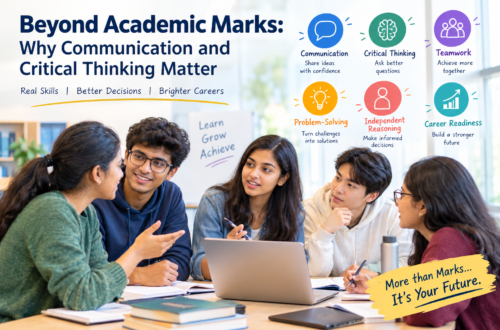


The University of Pennsylvania, commonly known as Penn or UPenn, is one of America’s most distinctive institutions of higher education. Located in Philadelphia, Pennsylvania, Penn combines a long academic tradition with research, entrepreneurship, professional education, interdisciplinary collaboration, and an energetic urban environment. 🎓✨
Founded by Benjamin Franklin in 1740, Penn has developed into a comprehensive research university with undergraduate and graduate programs spanning the arts and sciences, engineering, business, nursing, communication, design, education, medicine, law, and other professional disciplines.
What makes Penn especially interesting is the way its academic environment encourages students to move between different fields. A student can study economics while exploring technology, combine biology with data science, investigate entrepreneurship, or connect public policy with social science.
The university’s location in Philadelphia adds another dimension. Students are part of an established university campus while living in a major American city with connections to healthcare, business, government, culture, history, and technology.
For prospective students, Penn can therefore represent more than a place to earn a degree. It can be an environment for developing ideas, building relationships, conducting research, exploring careers, and preparing for a rapidly changing world.
1. The History of Penn and the Vision of Benjamin Franklin 📜

The history of Penn is deeply connected with Benjamin Franklin.
Franklin believed that education should prepare people for practical life as well as intellectual achievement. His vision contributed to the creation of an institution that emphasized useful knowledge and broad learning.
Penn’s origins date to 1740, making it one of the oldest institutions of higher education in the United States.
Over the centuries, the university expanded dramatically.
What began as an educational experiment eventually became a major research university with numerous schools and disciplines.
The historical character of Penn remains visible across its campus.
Buildings, statues, pathways, and traditions connect today’s students with generations of scholars who came before them.
Yet history does not mean standing still.
Penn has continually adapted to changes in science, technology, society, and professional education.
That combination of tradition and innovation is one of its defining qualities.
Students can study in historic surroundings while working with modern technologies and participating in contemporary research.
Franklin’s practical philosophy also remains relevant.
Education today is increasingly about applying knowledge.
Students may ask not only, “What do we know?” but also:
How can this knowledge solve a problem?
How can research improve society?
How can technology create new possibilities?
How can different disciplines work together?
These questions reflect the practical spirit that has long been associated with Penn.
2. The Philadelphia Campus Experience 🏙️🎓


Penn’s location is one of its major advantages.
The university is situated in Philadelphia, a city with a rich history and a large professional ecosystem.
The campus itself has a strong collegiate identity.
Walkways, green spaces, libraries, academic buildings, student centers, residence halls, and research facilities create an environment where students can live, study, and socialize.
One of the most recognizable campus areas is Locust Walk, a pedestrian pathway that connects parts of the university.
It can become a central part of daily student life, providing a place to walk between classes, meet friends, and experience campus activity.
The University City neighborhood surrounding Penn also contributes to the experience.
Students are close to restaurants, museums, shops, public transportation, medical institutions, and other educational organizations.
Philadelphia itself provides an enormous range of opportunities.
Students interested in history can explore the city’s historic sites.
Those interested in healthcare can observe one of America’s major medical ecosystems.
Business students can engage with companies and entrepreneurial communities.
Art and design students can explore museums and cultural institutions.
Political science and public-policy students can study a city with a complex social and governmental environment.
This creates an important relationship between university and city.
The city is not simply a place where students happen to live.
It can become an extension of the educational experience. 🌆
3. Penn’s Academic Structure and Intellectual Diversity 📚


Penn’s academic structure is one of its greatest strengths.
The university includes twelve schools, including four undergraduate schools and numerous graduate and professional schools.
Its academic community includes disciplines such as:
- Arts and sciences
- Engineering
- Business
- Nursing
- Communication
- Design
- Education
- Medicine
- Law
- Social policy
- Dental medicine
- Veterinary medicine
This variety creates an environment in which students can encounter different academic perspectives.
School of Arts and Sciences 📖
The College of Arts and Sciences provides a broad foundation in humanities, natural sciences, and social sciences.
Students can explore subjects such as history, economics, psychology, biology, mathematics, political science, philosophy, and literature.
Penn Engineering ⚙️
Engineering students study technologies and systems that can address real-world challenges.
Modern engineering connects with computing, medicine, energy, robotics, materials, and entrepreneurship.
Wharton Business School 💼
Wharton is internationally recognized for business education.
Students can explore finance, management, marketing, entrepreneurship, analytics, economics, and organizational behavior.
School of Nursing 🩺
Penn Nursing combines healthcare education with research and clinical preparation.
Healthcare today increasingly depends on technology, data, policy, and communication, making interdisciplinary collaboration particularly important.
Annenberg School for Communication 📡
Communication is essential in an era dominated by digital media.
Students and researchers can investigate how information moves through societies and how media influences individuals and communities.
The diversity of Penn’s schools allows students to think beyond traditional academic boundaries.
4. Interdisciplinary Learning at Penn 🔗💡
One of Penn’s most appealing characteristics is its emphasis on interdisciplinary learning.
Many important problems cannot be solved by a single academic field.
Consider healthcare.
Improving healthcare can require doctors, nurses, engineers, economists, data scientists, designers, policymakers, psychologists, and business specialists.
Technology presents a similar challenge.
Developing artificial intelligence requires computer science and engineering, but understanding its social consequences may require philosophy, communication, law, economics, psychology, and public policy.
Environmental challenges also cross disciplines.
Climate solutions can involve environmental science, engineering, finance, policy, business, urban planning, and community engagement.
Penn’s broad academic ecosystem provides opportunities for students to explore these intersections.
This can be especially useful for students who do not want to define themselves through a single subject.
A student might combine business with computer science.
Another might connect biology with economics.
Someone interested in international development might study political science alongside finance.
A design student could explore technology and entrepreneurship.
Interdisciplinary education can also encourage creativity.
When ideas from different fields meet, students may discover approaches that would not emerge within one discipline alone.
This is particularly important in the twenty-first century, when innovation increasingly occurs at the boundaries between subjects. 🌎
5. Research and Discovery 🔬🚀


Research is central to Penn’s identity as a major research university.
Faculty and students investigate questions across science, medicine, engineering, business, social science, communication, humanities, and other fields.
Research changes the nature of learning.
Instead of simply studying established knowledge, students can become involved in discovering something new.
A research experience may begin with a question.
For example:
How can a new technology improve healthcare?
What causes a particular social trend?
Can a new material improve energy efficiency?
How does communication influence public behavior?
How can businesses adapt to artificial intelligence?
Students then learn how to investigate those questions.
Research may involve experiments, interviews, data analysis, computer modeling, archival investigation, surveys, fieldwork, or theoretical analysis.
The process teaches students to handle uncertainty.
Sometimes an experiment fails.
Sometimes data contradict an initial assumption.
Sometimes a research question becomes more complicated after investigation.
These experiences are valuable because real-world problems are rarely straightforward.
Research can develop skills in:
- Critical thinking
- Data analysis
- Problem-solving
- Scientific reasoning
- Communication
- Collaboration
- Project management
- Independent learning
These skills can help students whether they continue into graduate school or enter professional careers.
Research also demonstrates an important principle:
Knowledge is not finished.
There are always new questions to investigate.
6. Medicine, Healthcare, and Life Sciences 🧬🩺


Healthcare is an important part of Penn’s academic ecosystem.
The university includes the Perelman School of Medicine, Penn Nursing, Penn Dental Medicine, and the School of Veterinary Medicine, creating a broad health-sciences community.
Healthcare research increasingly depends on collaboration.
Modern medicine involves genetics, engineering, artificial intelligence, data science, psychology, economics, public health, and policy.
For example, developing a medical device may require engineers and physicians.
Evaluating healthcare costs may involve economists and policymakers.
Understanding patient behavior may involve psychologists and communication researchers.
Using medical data responsibly may require computer scientists, ethicists, and legal experts.
This interdisciplinary environment can help students understand healthcare from multiple perspectives.
Penn’s health sciences also demonstrate the importance of translating research into practical outcomes.
Scientific discoveries can eventually contribute to new treatments, technologies, diagnostic methods, and healthcare practices.
For students interested in medicine or healthcare, this broader ecosystem can provide valuable opportunities to observe how different professions interact.
7. Wharton and the World of Business 💼📈


Business is another major component of Penn’s identity.
The Wharton School has a long history of business education and research.
Students interested in business can explore areas including:
- Finance
- Marketing
- Management
- Entrepreneurship
- Business analytics
- Economics
- Operations
- Strategy
- Organizational behavior
But modern business education extends beyond traditional finance and management.
Technology has transformed organizations.
Artificial intelligence is changing decision-making.
Data analytics influences marketing.
Globalization affects supply chains.
Sustainability is influencing corporate strategy.
Consumer behavior is evolving through digital platforms.
As a result, future business leaders need to understand technology, society, and global trends alongside traditional business concepts.
Penn’s interdisciplinary environment can help students explore these connections.
Entrepreneurship is another important area.
Starting a company requires more than an innovative idea.
Entrepreneurs need to understand customers, markets, finance, operations, technology, communication, and leadership.
A university community containing engineers, designers, scientists, business students, and researchers can create fertile ground for collaboration.
A student with a technical idea may find someone who understands marketing.
A business student may meet an engineer developing a new technology.
A designer may help transform a complicated product into a user-friendly experience.
Innovation often emerges from these interactions. 🚀
8. Engineering and Technological Innovation ⚙️🤖


Engineering at Penn is connected to the broader challenges facing modern society.
Students can explore areas involving computer science, electrical systems, mechanical systems, bioengineering, materials, robotics, and other technologies.
Engineering is increasingly interdisciplinary.
A biomedical engineer may work with physicians.
A computer scientist may collaborate with psychologists.
A robotics researcher may work with designers.
An energy researcher may collaborate with environmental scientists and economists.
Artificial intelligence provides another example.
AI can potentially improve healthcare, education, transportation, scientific research, and business.
But technology also creates questions about privacy, fairness, security, employment, misinformation, and ethics.
Students therefore need more than programming skills.
They need to understand people and institutions.
This is where interdisciplinary education becomes particularly valuable.
A technically sophisticated solution is not automatically a socially successful solution.
Engineers and computer scientists need to understand the environments in which technologies are used.
Penn’s combination of engineering, business, communication, law, medicine, design, and social science can support this broader perspective.
9. Design, Architecture, and Creative Thinking 🎨🏛️


Creative thinking is another important part of the Penn experience.
The Stuart Weitzman School of Design brings together fields related to architecture, city planning, landscape architecture, historic preservation, and related areas.
Design is fundamentally about solving problems through creative thinking.
A successful design must often consider:
- Function
- Aesthetics
- Sustainability
- Cost
- Human behavior
- Accessibility
- Technology
- Environment
This makes design naturally interdisciplinary.
Urban planning, for example, involves architecture, transportation, economics, environmental science, public policy, and community engagement.
A city is not simply a collection of buildings.
It is a system in which people, infrastructure, businesses, governments, and natural environments interact.
Studying design within a broader university can therefore expose students to multiple perspectives.
Creative thinking also benefits students in fields outside the arts.
Engineers need creativity.
Entrepreneurs need creativity.
Scientists need creativity.
Researchers often need to imagine approaches that have not previously been tested.
Creativity is therefore not simply an artistic skill.
It is a method of approaching problems.
10. Student Life and the Penn Community 🧑🤝🧑🎉


A university experience is shaped by people as much as academic programs.
Penn students participate in hundreds of organizations and activities covering academic interests, culture, athletics, community service, politics, arts, entrepreneurship, media, and recreation.
Student organizations can become important communities.
A student may join a cultural organization and meet people with similar experiences.
Another may join a business organization and develop professional connections.
Someone interested in music can participate in a performance group.
An environmental student can become involved in sustainability activities.
These organizations provide opportunities to develop leadership.
Planning an event can teach project management.
Running a club can develop communication skills.
Managing a publication can teach teamwork and responsibility.
Volunteering can create connections with the surrounding Philadelphia community.
University activities also provide opportunities to relax.
Academic work can be demanding, and students need spaces where they can socialize and recharge.
Friendships formed through residence halls, clubs, classes, athletics, and shared experiences can become some of the most valuable parts of university life. ❤️
11. Athletics and the Penn Spirit 🏃♂️🏀


Athletics contribute another dimension to campus culture.
Penn competes as the Quakers, and athletics are connected to the university’s traditions and community identity.
Franklin Field is one of the campus’s iconic athletic venues and has a long association with Penn sports.
Athletics can bring students together.
Fans attend games, students participate in recreational sports, and athletes develop teamwork and discipline.
The lessons associated with athletics often overlap with academic and professional life.
Success requires preparation.
Teams need communication.
Individuals need resilience.
Competition teaches people how to respond to setbacks.
These qualities are valuable far beyond the playing field.
Even students who do not participate in varsity athletics can find recreational and fitness opportunities.
Physical activity can also provide an important balance to academic work.
12. Libraries, Research Collections, and Learning Spaces 📚✨


Libraries remain essential in a research university.
Penn Libraries provide students and researchers with extensive collections, digital resources, study spaces, archives, and research support.
A modern academic library is not simply a place to borrow books.
Students can access:
- Scholarly journals
- Digital databases
- Electronic books
- Historical collections
- Specialized research materials
- Study rooms
- Collaborative spaces
- Research assistance
Learning how to navigate these resources is an important academic skill.
The modern information environment is enormous.
Students can find thousands of articles and websites about almost any subject.
The challenge is determining which sources are reliable.
Research training helps students learn to evaluate evidence.
This is particularly important in an era of social media and generative AI.
AI tools can produce information quickly, but students still need to verify claims and understand where information comes from.
Strong research habits therefore remain valuable.
Libraries provide an environment where students can slow down, investigate evidence, and build thoughtful arguments.
13. Philadelphia as a Living Classroom 🌆📚


7
Philadelphia provides an educational environment that is difficult to reproduce in a purely residential college town.
The city has played an important role in American history and remains a major center for healthcare, education, business, culture, and government.
Students can explore historic locations connected to the founding of the United States.
They can visit museums and galleries.
They can attend concerts and performances.
They can explore restaurants representing many cultures.
They can observe urban development and transportation systems.
They can interact with communities facing complex social challenges.
For students studying urban policy, sociology, economics, public health, architecture, or political science, the city can provide real-world examples of academic concepts.
Healthcare students can observe one of the country’s major medical environments.
Business students can explore professional networks.
Artists and designers can engage with museums and cultural institutions.
Journalism and communication students can study media in a large metropolitan environment.
The city therefore becomes an extension of the university.
14. Global Perspectives and International Connections 🌍
Penn attracts students and researchers from around the world.
A globally diverse university community can provide perspectives that students might not encounter in their home communities.
Imagine discussing international economics with classmates who have lived in different economic systems.
Or studying climate policy alongside students from regions experiencing different environmental challenges.
Or discussing global healthcare with people who have experienced different healthcare systems.
These interactions can deepen classroom discussions.
They can also prepare students for international careers.
Modern organizations increasingly operate across borders.
Businesses serve global customers.
Scientific research involves international collaborations.
Technology crosses national boundaries.
Public-health challenges can spread internationally.
Understanding different cultures and perspectives is therefore increasingly important.
International students can also benefit from participating in American university life while maintaining connections with their own cultures and communities.
The resulting environment can be both academically challenging and personally enriching.
15. Entrepreneurship and the Spirit of Innovation 🚀💡
Entrepreneurship is closely connected to Penn’s culture of practical problem-solving.
Students can encounter entrepreneurship through business courses, competitions, organizations, research, technology projects, and interdisciplinary collaboration.
The entrepreneurial process begins with identifying a problem.
What do people need?
What is currently inefficient?
What technology could improve a process?
What service could make life easier?
What social challenge needs a new approach?
The next step is experimentation.
A student may build a prototype.
Another might interview potential users.
A team may develop a business model.
Someone else might analyze market opportunities.
This process teaches students that innovation involves iteration.
The first idea is rarely perfect.
Feedback leads to changes.
Failures reveal weaknesses.
Unexpected discoveries can produce better ideas.
This mindset is valuable even for students who never start a company.
Entrepreneurial thinking teaches people to recognize problems and search for practical solutions.
16. Preparing Students for Future Careers 🚀🎯
A university education should prepare students for an uncertain future.
The careers available today may change significantly over the next decade.
Artificial intelligence will automate some tasks and create new professions.
Healthcare will evolve through biotechnology and data science.
Businesses will continue adapting to digital transformation.
Environmental challenges will create demand for new technologies and policies.
Communication will continue changing through digital platforms.
Students therefore need flexible skills.
Penn’s academic environment can help develop several important capabilities.
Critical Thinking 🧠
Students learn to evaluate evidence and consider different explanations.
Communication 🗣️
Strong writing and speaking skills are essential across industries.
Collaboration 🤝
Modern projects often involve teams containing people with different expertise.
Research 🔬
Students learn how to find, evaluate, and analyze information.
Creativity 🎨
Innovation requires new ideas and alternative approaches.
Adaptability 🌱
Professionals must continue learning as industries change.
Leadership ⭐
Student organizations, research projects, and extracurricular activities can create opportunities to practice leadership.
These abilities can support careers in many sectors.
17. Financial Planning and the College Decision 💰
Choosing a university is both an academic and financial decision.
Prospective Penn students should carefully investigate tuition, housing, food, transportation, books, personal expenses, and financial-aid policies.
Penn provides financial-aid information for prospective students and families, and policies can vary depending on individual circumstances.
Because financial-aid policies and costs can change, students should consult the university’s official admissions and financial-aid resources for current information.
Financial planning should begin early.
Families should understand application requirements, financial-aid deadlines, required forms, and eligibility criteria.
Students should also compare the total cost of attendance rather than looking only at tuition.
A university’s value depends on the relationship between cost, educational opportunities, financial aid, career preparation, and personal goals.
The best decision is not necessarily the university with the highest reputation.
It is the institution that provides an environment where a student can thrive academically, personally, and financially.
18. How to Make the Most of the Penn Experience 🧭
Students who attend Penn can take many approaches to building their university experience.
The first is to remain curious.
Do not restrict yourself to the subjects you already understand.
Take advantage of opportunities to explore unfamiliar fields.
The second is to connect with professors.
Faculty members can become mentors, research collaborators, and sources of academic guidance.
The third is to participate in research.
Even students who do not plan to become academics can benefit from research experience.
The fourth is to become involved in student organizations.
Campus communities provide opportunities for friendship, leadership, and personal growth.
The fifth is to explore Philadelphia.
A city surrounding a university can provide educational experiences that are impossible to reproduce entirely inside classrooms.
Finally, students should make time for personal well-being.
Academic achievement matters, but university should also include friendships, recreation, creativity, and exploration.
Balance is an important part of long-term success. 🌟
19. The Future of Penn in a Changing World 🔮


8
The future of higher education will be shaped by technological, environmental, social, and economic change.
Artificial intelligence will influence classrooms and research.
Biotechnology may transform medicine.
Climate change will create new scientific and policy challenges.
Digital communication will continue changing journalism and society.
Businesses will need to adapt to automation and data-driven decision-making.
Universities will therefore need to prepare students not only for today’s jobs but for tomorrow’s unknown opportunities.
Penn’s broad academic structure provides a strong foundation for this challenge.
The university can connect technology with business.
Medicine with engineering.
Design with sustainability.
Communication with artificial intelligence.
Public policy with economics.
Research with entrepreneurship.
These connections can help students understand complex issues from multiple perspectives.
The future may belong to people who can cross boundaries between disciplines.
Rather than becoming experts in only one narrow area, many professionals will need to communicate across fields.
That is one reason interdisciplinary education is increasingly important.
20. Final Thoughts: Discovering the Penn Experience 🎓✨
The University of Pennsylvania represents a unique combination of history, academic rigor, research, professional education, innovation, and urban opportunity.
From its origins connected to Benjamin Franklin to its modern research programs, Penn has maintained an emphasis on knowledge that can influence the world.
Its Philadelphia location provides students with access to an enormous range of cultural, professional, historical, and community experiences.
Its academic structure creates opportunities to explore subjects ranging from engineering and medicine to business, communication, design, education, arts, humanities, and social sciences.
Its research culture encourages students to move beyond simply learning existing information and begin asking new questions.
Its interdisciplinary environment makes it possible to connect different forms of knowledge.
And its student community provides opportunities for friendship, leadership, creativity, athletics, service, and personal growth. 🌎
For prospective students, the most important question is not simply whether Penn is prestigious.
The better question is:
Can Penn provide the environment you need to become the person and professional you want to be?
If you are curious, ambitious, collaborative, and interested in exploring connections between different fields, Penn can offer an especially rich environment.
You might enter with an interest in business and discover technology.
You might arrive interested in engineering and become fascinated by medicine.
You might study communication and develop an interest in artificial intelligence.
You might begin with a scientific question and discover an entrepreneurial opportunity.
That possibility of discovery is one of the most exciting parts of university life. 💡
Ultimately, UPenn is not simply a collection of classrooms, laboratories, libraries, and professional schools. It is a community where ideas meet people, disciplines intersect, and students have opportunities to turn curiosity into action.
For anyone considering studying in the United States, Penn deserves attention not only because of its historic reputation, but because of the breadth of experiences available to students today.
From the green spaces of campus to the streets of Philadelphia, from research laboratories to creative studios, from business classrooms to medical centers, the Penn experience can provide countless opportunities to learn and grow.
The journey begins with a question.
The university provides the environment to explore it.
And the discoveries made along the way can shape a student’s education, career, and perspective for years to come. 🎓🌍💡