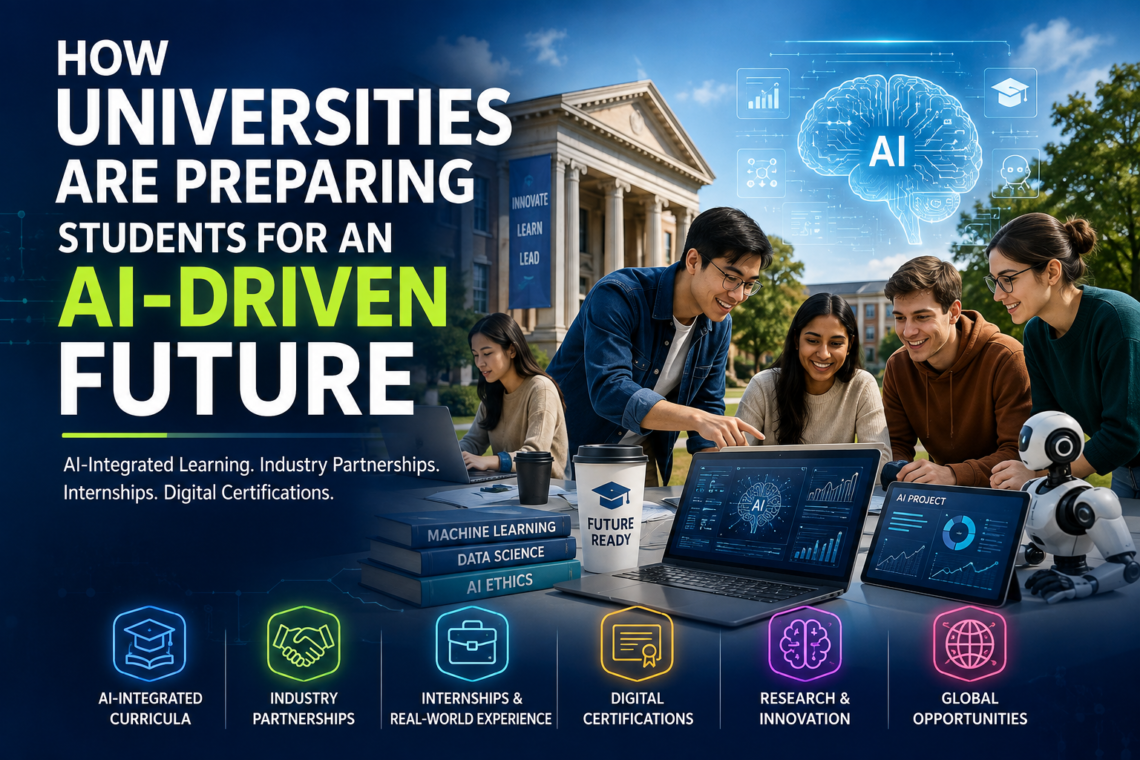
Artificial Intelligence (AI) is no longer a futuristic concept—it’s becoming a core part of how businesses operate, governments deliver services, and individuals interact with technology. As AI reshapes industries ranging from healthcare and finance to education and manufacturing, universities around the world are adapting their teaching methods to prepare students for an AI-driven workforce. Modern universities are no longer focused solely on traditional degrees. Instead, they are integrating AI into academic programs, collaborating with leading technology companies, offering hands-on internships, and encouraging students to earn digital certifications that improve employability. These changes ensure graduates possess both technical expertise and essential…
-
-
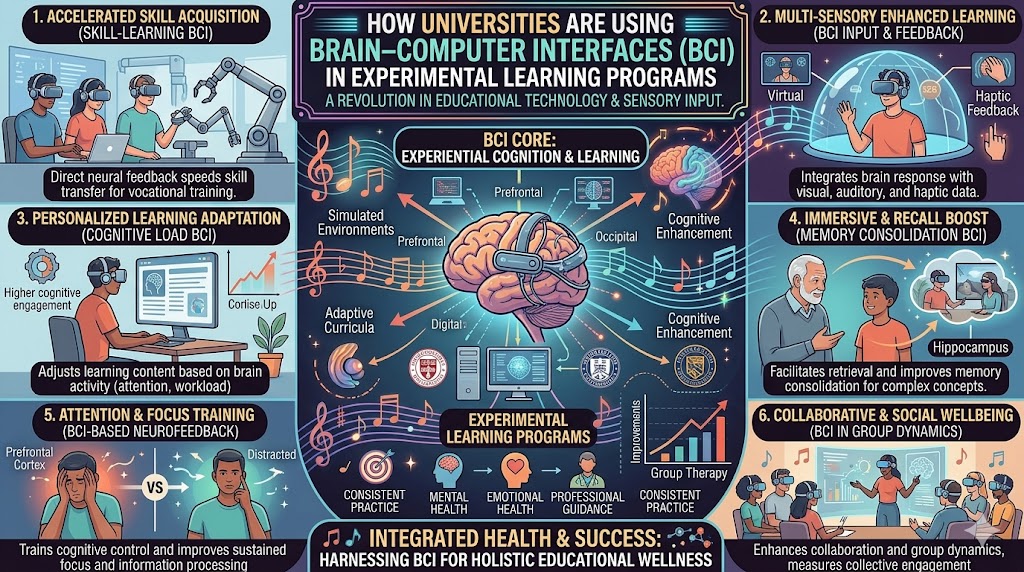
Universities are using Brain–Computer Interfaces in experimental learning programs to study cognition, build neuroadaptive classrooms, enable brain-controlled VR and robotics, and personalize education through real-time brain feedback. Brain–Computer Interfaces (BCIs) are no longer confined to science fiction or medical rehabilitation labs. Today, leading universities around the world are integrating BCI systems into experimental learning programs, reshaping how students interact with technology, understand neuroscience, and even learn itself. These systems create a direct communication pathway between the brain and external devices, allowing thought-based control, neurofeedback-driven learning, and real-time cognitive monitoring. As research expands across neuroengineering and AI, BCIs are becoming powerful…
-
Studying abroad is more than an academic experience—it is a powerful career investment. In today’s global economy, employers value graduates who have international exposure, cross-cultural understanding, and adaptable skills. An international degree can significantly expand your job opportunities, both in your home country and across the world. 🌍 1. Global Recognition of Qualifications One of the biggest advantages of earning an international degree is global recognition. Degrees from well-known universities in countries like the USA, UK, Canada, Australia, Germany, and others are often respected by employers worldwide. 6 Many multinational companies actively prefer candidates with overseas education because it signals:…