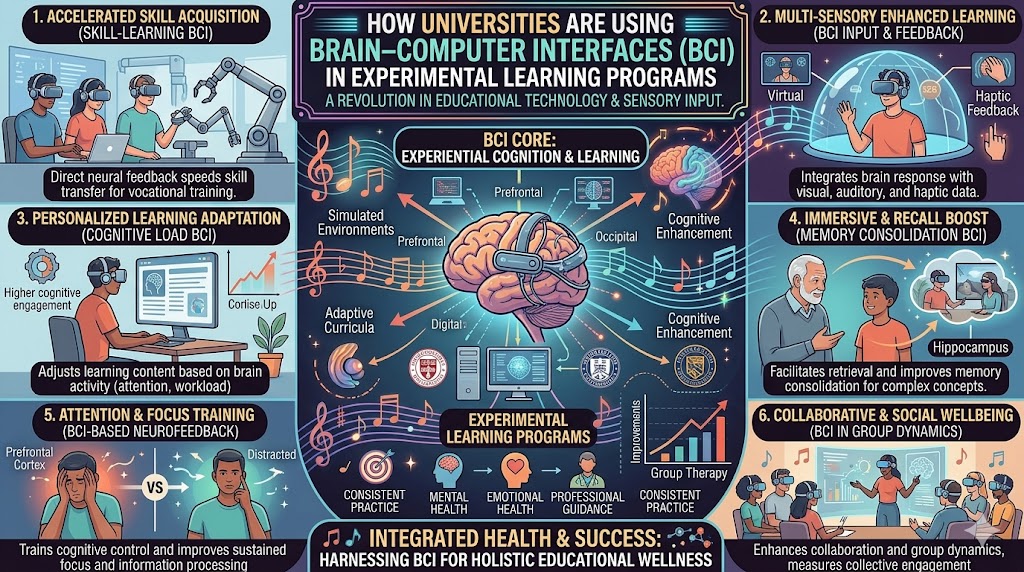
Universities are using Brain–Computer Interfaces in experimental learning programs to study cognition, build neuroadaptive classrooms, enable brain-controlled VR and robotics, and personalize education through real-time brain feedback. Brain–Computer Interfaces (BCIs) are no longer confined to science fiction or medical rehabilitation labs. Today, leading universities around the world are integrating BCI systems into experimental learning programs, reshaping how students interact with technology, understand neuroscience, and even learn itself. These systems create a direct communication pathway between the brain and external devices, allowing thought-based control, neurofeedback-driven learning, and real-time cognitive monitoring. As research expands across neuroengineering and AI, BCIs are becoming powerful…