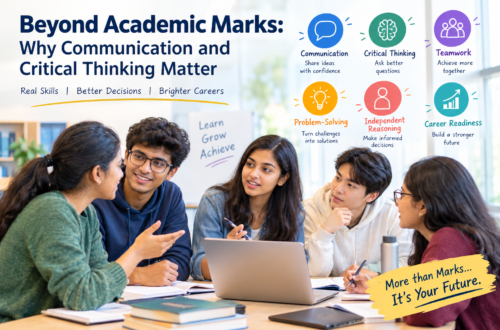


The transition from school to university represents one of the most exciting stages of a student’s educational journey. It is a time when curiosity can become a deeper academic interest, classroom knowledge can connect with real-world challenges, and students can begin developing the skills they will carry into their professional lives.
The University of Pennsylvania, commonly known as Penn or UPenn, offers an environment where academic study, research, innovation, entrepreneurship, community engagement, and student life intersect.
Located in Philadelphia, Pennsylvania, Penn is part of the historic fabric of one of America’s major cities. Its urban setting gives students opportunities to engage with a broad range of cultural, professional, scientific, and community resources.
But a university experience is not defined only by its location or reputation. It is also shaped by the people students meet, the questions they explore, the projects they undertake, and the communities they join.
This guide explores the many dimensions of the Penn experience, from academics and interdisciplinary learning to research, technology, entrepreneurship, campus life, career preparation, and the importance of developing curiosity and independent thinking. 📚✨
🏛️ A University Built Around Ideas and Discovery


Universities are places where established knowledge meets new questions.
At Penn, students can study subjects ranging from business and engineering to medicine, social sciences, humanities, design, communication, and the natural sciences. This academic breadth creates opportunities for students to explore connections between different fields.
Modern challenges rarely fit neatly into a single discipline.
Consider healthcare, for example. Improving healthcare can involve medicine, biology, engineering, economics, public policy, psychology, data science, ethics, and communication.
Likewise, addressing climate-related challenges may involve environmental science, engineering, economics, urban planning, political science, architecture, and community engagement.
Interdisciplinary education helps students recognize these connections.
Instead of thinking about each academic subject as an isolated category, students can learn to approach problems from multiple perspectives.
This approach can encourage intellectual flexibility.
A student may begin university with a specific academic interest and later discover that another discipline provides useful tools for understanding it.
That process of discovery is one of the most valuable parts of higher education. 🔎
📚 Exploring Penn’s Academic Environment
Penn’s academic structure provides students with opportunities to pursue specialized interests while also developing broader intellectual skills.
Different schools and programs provide distinct educational experiences, but students can benefit from the larger university community as well.
An engineering student may become interested in entrepreneurship.
A business student may become fascinated by behavioral science.
A computer science student may explore healthcare applications.
A humanities student may become interested in digital technology.
These combinations can create unusual and valuable educational paths.
🧠 Learning Through Questions
University-level learning often differs from earlier education because students are expected to take greater responsibility for their intellectual development.
Instead of simply asking, “What is the correct answer?” students may increasingly ask:
Why is this the answer?
What evidence supports it?
What assumptions are being made?
Could another explanation be possible?
How might this idea change under different circumstances?
These questions encourage critical thinking.
Critical thinking is useful in nearly every career because professionals regularly need to evaluate information, compare alternatives, interpret evidence, and communicate conclusions.
Students can develop these skills through essays, research projects, presentations, laboratory work, discussions, case studies, and collaborative assignments.
🔬 Research and the Search for New Knowledge
Research is an essential component of a major research university.
At Penn, research can span many disciplines and take many forms.
A laboratory researcher may investigate biological processes.
An engineer may develop new technologies.
A social scientist may study human behavior.
A historian may analyze archival materials.
A computer scientist may create new computational methods.
A business researcher may examine organizational decision-making.
An artist or designer may investigate new approaches to creative expression.
Despite these differences, research shares a common foundation: curiosity.
Researchers begin by identifying questions.
They then develop methods for investigating those questions, collect and analyze evidence, consider limitations, and communicate their findings.
For students, participating in research can transform their understanding of academic subjects.
Instead of simply reading about discoveries made by other people, students can experience the uncertainty and creativity involved in generating knowledge.
🧪 Research also teaches patience.
Experiments do not always work.
Data can produce unexpected results.
A hypothesis can turn out to be incorrect.
A project can require repeated revisions.
These experiences can teach students that learning is not always a straight line.
💻 Technology and Innovation at Penn


Technology is transforming education, healthcare, business, communication, manufacturing, transportation, and entertainment.
As a result, modern university students need more than basic technical knowledge. They need to understand how technology interacts with people and organizations.
Penn’s academic environment provides opportunities to explore technology from multiple perspectives.
Computer science and engineering can provide technical foundations.
Business education can examine how innovations reach markets.
Healthcare programs can explore technology’s role in patient care.
Social sciences can examine how technology changes behavior.
Humanities can investigate ethical and cultural questions surrounding technological development.
Artificial intelligence provides a useful example.
AI systems can process large amounts of information and perform increasingly sophisticated tasks. Yet responsible use requires attention to data, privacy, security, transparency, bias, and human oversight.
Students who understand both the technical and social dimensions of technology can contribute more thoughtfully to future innovations.
💡 Innovation is therefore not simply about creating something new.
It is about solving meaningful problems.
🚀 Entrepreneurship and Turning Ideas Into Action
Entrepreneurship is another area where academic knowledge can become practical experience.
An entrepreneurial project often begins with a simple observation:
There is a problem that needs solving.
From there, students can investigate the problem, talk with potential users, research existing solutions, develop prototypes, and consider how an idea could become sustainable.
University environments can be valuable places for experimentation because students have access to peers from different disciplines.
A designer can collaborate with an engineer.
A business student can work with a computer scientist.
A healthcare student can collaborate with someone studying data analytics.
Together, they may approach a problem from different perspectives.
Entrepreneurship also teaches students that not every idea succeeds immediately.
A prototype may fail.
Users may not respond as expected.
A business model may need to change.
These experiences can teach adaptability.
💼 Even students who never start a company can benefit from entrepreneurial thinking because employers often value initiative, creativity, problem-solving, and the ability to work with uncertainty.
🌆 Learning in Philadelphia


Penn’s location in Philadelphia adds another dimension to the student experience.
Philadelphia is a major American city with a long history in education, medicine, culture, business, science, and public life.
An urban university environment can provide students with experiences that extend beyond campus.
Students may encounter museums, libraries, hospitals, businesses, nonprofit organizations, cultural institutions, public spaces, and community programs.
The city can also serve as a practical learning environment.
For students interested in urban planning, Philadelphia can become a case study.
For healthcare students, the city’s medical institutions provide an important professional context.
For business students, the regional economy can offer exposure to organizations and industries.
For students studying history, the city provides access to a wealth of historical sites and collections.
🏙️ This connection between campus and city can make education feel more connected to everyday life.
🤝 Student Organizations and Community
University life involves more than lectures and exams.
Student organizations can become an important part of the experience.
Clubs and societies may focus on academic interests, cultural communities, professional development, sports, arts, volunteering, entrepreneurship, technology, or social activities.
Participation can help students develop relationships with people who share their interests.
It can also encourage leadership.
Organizing an event requires planning.
Running a club may involve budgeting.
Managing a team requires communication.
Launching a student initiative may involve persuading others to participate.
These activities provide practical experiences that are difficult to reproduce through textbooks alone.
🎭 Creative organizations can also give students opportunities to explore interests outside their primary academic field.
A science student might participate in theater.
A business student might join a music organization.
An engineering student might explore photography.
These experiences can contribute to a balanced university life.
🌍 Learning From a Diverse Community
Universities bring together students with different experiences and perspectives.
This diversity can influence both classroom discussions and everyday interactions.
Students may encounter people who approach problems differently, communicate differently, or have different educational and cultural backgrounds.
Learning to collaborate across differences is increasingly important.
Modern organizations often include teams composed of people with different professional specialties and personal experiences.
Effective collaboration requires listening.
It requires asking questions.
It requires explaining ideas clearly.
It also requires recognizing that disagreement does not necessarily mean that one person is unwilling to cooperate.
A university environment can provide opportunities to practice these skills.
🌎 Students can also expand their understanding of the world through international study, cultural organizations, global research, language learning, and interaction with peers from different countries.
🩺 Connecting Education With Healthcare
Penn has a particularly notable presence across health-related education and research.
Healthcare is an area where interdisciplinary thinking is especially important.
A modern healthcare system depends on physicians, nurses, researchers, engineers, pharmacists, data specialists, administrators, public health professionals, designers, and many other specialists.
Technology is also transforming healthcare.
Electronic health records, medical imaging, robotics, biotechnology, artificial intelligence, remote monitoring, and data analytics are changing how healthcare professionals work.
Students studying healthcare-related fields can therefore benefit from understanding both human and technological dimensions.
The patient remains at the center of healthcare, but modern healthcare systems also involve complex technological and organizational structures.
This makes collaboration essential.
🧬 Research can also connect basic science with clinical applications, creating pathways from laboratory discoveries toward potential real-world uses.
📊 Business, Economics, and Decision-Making
Business education provides another opportunity to explore how ideas operate in real organizations.
Students studying business and economics can examine markets, finance, management, entrepreneurship, operations, marketing, organizational behavior, and strategy.
However, modern business is not simply about maximizing financial outcomes.
Organizations also face questions involving sustainability, technology, ethics, employee well-being, customer trust, data security, and social responsibility.
Students can benefit from examining these issues together.
For example, data analytics may improve business decision-making, but organizations must also determine how data should be collected and used.
Artificial intelligence may increase efficiency, but companies need to consider how automated decisions affect employees and customers.
Sustainability initiatives may reduce resource consumption, but organizations must also consider costs and implementation.
📈 These examples demonstrate why business increasingly intersects with technology, ethics, public policy, and social science.
🎨 The Importance of Humanities and Creative Thinking
Science and technology receive significant attention in discussions about the future, but humanities and creative disciplines remain important.
Literature, history, philosophy, languages, communication, art, music, and related fields help people understand culture, values, identity, interpretation, and human experience.
Technology can tell us what is possible.
Humanities can help us ask what should be done and how people might experience the consequences.
Creative thinking also supports innovation.
Many new ideas emerge when people connect concepts that previously appeared unrelated.
A designer might approach a technological problem differently from an engineer.
A writer might notice a communication issue that a technical team overlooked.
A historian might identify patterns that help an organization understand current behavior.
🎨 Creativity therefore should not be treated as separate from practical problem-solving.
It can be part of the process.
📖 Developing Better Study Strategies
University courses can become demanding, particularly when students balance several subjects simultaneously.
Developing effective study habits early can make academic life more manageable.
One useful approach is active learning.
Rather than repeatedly reading the same material, students can test themselves.
They can create questions, solve practice problems, explain concepts aloud, or write summaries without looking at their notes.
Another strategy is spaced learning.
Instead of studying everything immediately before an examination, students can review material across multiple sessions.
This approach can make it easier to identify gaps in understanding.
Students can also divide major assignments into stages.
For a research paper, the stages might include:
Researching the topic.
Identifying sources.
Developing an argument.
Creating an outline.
Writing a draft.
Revising the structure.
Editing the final version.
Breaking large projects into smaller tasks can make them less intimidating.
📌 Organization is not about making every day perfectly efficient. It is about creating enough structure to keep responsibilities manageable.
🧠 Building Critical Thinking Skills
Critical thinking is one of the most transferable outcomes of higher education.
Students encounter claims every day through social media, news, advertising, academic publications, videos, and conversations.
Evaluating those claims requires careful reasoning.
Students can ask several questions:
What evidence is provided?
Is the source credible?
What methodology was used?
Are important limitations acknowledged?
Could other explanations exist?
Is the statement describing evidence or expressing an opinion?
These questions can help students become more careful readers and researchers.
Critical thinking does not mean rejecting every claim.
It means evaluating claims according to evidence.
🔎 This ability is useful in academic research, professional work, and everyday life.
💼 Preparing for Professional Life
A university education can provide more than subject-specific knowledge.
Students can develop transferable skills that apply across industries.
Communication is one example.
Professionals need to write emails, create reports, explain ideas, present information, and communicate with colleagues.
Teamwork is another.
Most modern workplaces involve collaboration.
Problem-solving is equally important.
Employers frequently encounter situations where there is no obvious answer.
Students can begin developing these abilities through coursework, group projects, research, student organizations, internships, volunteering, and personal projects.
📋 Turning Experiences Into Professional Skills
Students sometimes underestimate the value of extracurricular activities.
Suppose a student organizes a campus event.
That experience may involve scheduling, budgeting, communication, promotion, teamwork, and problem-solving.
A student leading a research project may develop data analysis and presentation skills.
Someone working on a technology project may create a portfolio that demonstrates practical abilities.
The important step is learning how to describe these experiences clearly.
Instead of simply saying, “I joined a club,” a student can explain what they contributed, what challenges they encountered, and what they learned.
🚀 Professional development begins long before the first full-time job application.
🏠 Creating a Healthy University Routine
Academic ambition is important, but students also need balance.
A sustainable university routine can include study time, rest, exercise, social activities, hobbies, and personal reflection.
Students may discover that their productivity varies throughout the day.
Some people concentrate better in the morning.
Others prefer evening study.
Understanding personal patterns can help students create realistic schedules.
Sleep is also important.
Staying awake all night may seem like a temporary solution to an approaching deadline, but regular sleep supports concentration and learning.
Exercise can also provide a useful break from academic work.
Even short walks can create time away from screens and books.
🌿 Balance does not mean giving every activity equal time.
It means creating a routine that can be maintained over the long term.
🌱 Sustainability and Responsible Innovation
Universities can serve as environments for exploring sustainability.
Buildings, transportation, food systems, energy use, waste management, and water consumption all present practical questions.
Students interested in sustainability can examine how organizations make environmental decisions and how those decisions interact with economics and human behavior.
A successful sustainability strategy often requires more than a technological solution.
People need to understand the purpose of the change.
Organizations need systems that make sustainable choices practical.
Policies may influence incentives.
Communication can shape participation.
This makes sustainability inherently interdisciplinary.
🌱 The same principle applies to many global challenges.
Complex problems often require teams rather than individual specialists.
🌐 Preparing for a Connected Future
The professional world is becoming increasingly interconnected.
Companies may operate internationally.
Research teams may collaborate across continents.
Digital platforms allow people to work remotely.
Technology can connect students and professionals with opportunities far beyond their immediate communities.
This environment creates opportunities for people who can communicate across cultures and disciplines.
Students can prepare by developing adaptable skills.
Learning how to learn is especially valuable.
Specific software programs may become outdated.
Industries may change.
Job descriptions may evolve.
But the ability to research, analyze, communicate, collaborate, and adapt remains useful.
🌎 A university education can therefore become a foundation for lifelong learning rather than preparation for only one position.
💡 Curiosity as a Long-Term Advantage
Curiosity is one of the simplest yet most powerful qualities a student can develop.
Curious students ask questions.
They explore unfamiliar subjects.
They seek explanations.
They experiment.
They read beyond assigned materials.
They talk with people who know more about a topic.
This mindset can transform education.
Instead of studying only because an examination is approaching, students begin studying because they want to understand.
That shift can create deeper engagement.
Curiosity can also lead to unexpected opportunities.
A casual conversation can inspire a research project.
An elective course can become a major interest.
A student organization can introduce a career path.
A difficult assignment can reveal a previously unnoticed ability.
✨ University is full of possibilities that students cannot always predict in advance.
🎓 Creating a Personal Penn Journey
There is no single way to experience Penn.
Students have different goals, interests, schedules, backgrounds, and definitions of success.
Some may prioritize research.
Others may focus on entrepreneurship.
Some may become deeply involved in student organizations.
Others may dedicate significant time to creative work, athletics, community engagement, internships, or academic exploration.
The important thing is intentional engagement.
Students can ask themselves:
What subjects genuinely interest me?
Which skills do I want to develop?
What communities do I want to join?
What kind of projects would challenge me?
What experiences could help me understand possible careers?
These questions can help students make deliberate choices about their university experience.
🌟 Final Thoughts: Making the Most of the UPenn Experience
The University of Pennsylvania offers students an environment where academic study can connect with research, innovation, entrepreneurship, healthcare, technology, creative work, and a major urban community.
Its interdisciplinary possibilities can encourage students to look beyond the boundaries of individual subjects. Research can teach them how knowledge is created. Student organizations can develop collaboration and leadership skills. Philadelphia can provide an extended environment for cultural, professional, and community experiences.
Most importantly, students can use university as a period of exploration.
🎓 They can ask difficult questions.
🔬 They can investigate unfamiliar ideas.
💻 They can experiment with technology.
🚀 They can develop projects.
🤝 They can build relationships.
🌍 They can learn from different perspectives.
🎨 They can explore creativity.
📚 And they can develop habits of lifelong learning.
A university experience is ultimately shaped not only by the institution itself but by how students engage with the opportunities around them. At Penn, students can combine academic curiosity with practical experiences and gradually build a path that reflects their individual interests and aspirations.
The journey from classroom learning to professional life is rarely perfectly predictable. That is precisely why curiosity, adaptability, critical thinking, communication, and a willingness to explore remain so valuable.
For students considering UPenn, understanding these dimensions can help them look beyond a university’s name and think more carefully about what they want from their education.