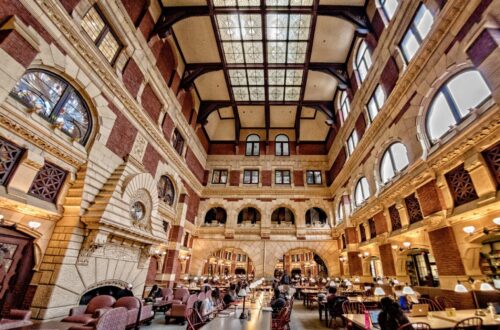


Introduction: Discovering the Legacy and Impact of UPenn 🌟📚
The University of Pennsylvania, commonly known as UPenn or Penn, is one of the most prestigious universities in the world. Located in Philadelphia, Pennsylvania, UPenn is recognized for its outstanding academic programs, groundbreaking research, entrepreneurial culture, and commitment to creating positive change.
Founded by Benjamin Franklin in 1740, UPenn has a long tradition of combining knowledge with practical application. Unlike traditional educational models that focused only on classical studies, Franklin envisioned an institution that would prepare students for real-world challenges through science, business, communication, and professional education.
Today, UPenn continues this vision by encouraging students to explore ideas across multiple disciplines. The university provides an environment where innovation, leadership, and collaboration are at the center of academic life.
✨ From business and medicine to technology and social sciences, UPenn has influenced countless industries and produced leaders who have made significant contributions around the world.
A Historic Ivy League Institution with a Modern Vision 🏛️🌍
UPenn is one of the eight Ivy League universities, a group known internationally for academic excellence and historic importance. Throughout its history, Penn has developed a reputation for combining rigorous education with practical problem-solving.
The university’s foundation is built around several important principles:
💡 Innovation through research
🌎 Global engagement
🤝 Community service
🚀 Entrepreneurship
📖 Interdisciplinary learning
Benjamin Franklin’s belief that education should improve society continues to influence the university’s culture. Students are encouraged not only to gain knowledge but also to use that knowledge to create meaningful solutions.
The university’s location in Philadelphia also provides unique opportunities. As one of America’s oldest cities, Philadelphia offers students access to cultural institutions, businesses, hospitals, government organizations, and research centers.
Academic Excellence Across Diverse Fields 🎓✨
UPenn offers a wide range of undergraduate, graduate, and professional programs. Its schools are known for combining specialized knowledge with interdisciplinary opportunities.
The university includes internationally recognized schools such as:
📘 College of Arts and Sciences
💼 Wharton School
⚕️ Perelman School of Medicine
⚖️ Carey Law School
🧪 School of Engineering and Applied Science
🎓 Graduate School of Education
🏥 School of Nursing
Each school contributes to Penn’s reputation as a comprehensive research university.
The Wharton School: Leading the Future of Business 💼📈
The Wharton School at UPenn is one of the most respected business schools in the world. It has played a major role in shaping modern business education and leadership development.
Students at Wharton explore areas such as:
📊 Finance
🌐 International business
🚀 Entrepreneurship
📢 Marketing
📈 Management
💡 Innovation strategy
Wharton emphasizes analytical thinking, leadership, and real-world experience. Students often participate in business competitions, startup projects, internships, and consulting opportunities.
The school’s entrepreneurial culture encourages students to transform ideas into successful ventures. Many Wharton graduates have become influential business leaders, founders, investors, and innovators.
Research and Innovation at UPenn 🔬🚀
Research is one of the most important parts of UPenn’s identity. The university supports thousands of research projects that address challenges in science, technology, healthcare, and society.
Penn researchers work on areas including:
🧬 Biotechnology
🤖 Artificial intelligence
🧠 Neuroscience
🌱 Sustainability
💊 Medical discoveries
💻 Digital technologies
One of UPenn’s greatest strengths is collaboration between different academic fields. Researchers from medicine, engineering, business, and social sciences often work together to create innovative solutions.
For example:
⚕️ Medical researchers develop new healthcare treatments.
🤖 Engineers create advanced technologies.
📊 Business experts explore ways to bring innovations to communities.
🌍 Social scientists study how solutions can improve society.
This interdisciplinary approach helps UPenn remain at the forefront of global research.
Student Life and Campus Community 🏫🎉
Life at UPenn extends beyond classrooms and laboratories. The university offers a vibrant campus environment where students can develop friendships, leadership skills, and personal interests.
Students participate in hundreds of organizations focused on:
🎭 Arts and culture
🏀 Sports and recreation
🌎 Community service
💻 Technology
📚 Academic interests
🌱 Environmental initiatives
Campus organizations allow students to connect with people from different backgrounds and explore new experiences.
UPenn also encourages students to participate in service-learning programs and community projects throughout Philadelphia. These experiences help students understand the importance of social responsibility.
A Global Community of Students and Scholars 🌎🤝
UPenn attracts students from across the world, creating a diverse and international campus community.
The university values diversity because different perspectives contribute to creativity and innovation. Students learn from classmates who bring unique cultural experiences, academic interests, and personal stories.
Global programs provide opportunities for:
✈️ International study
🌍 Research collaborations
🤝 Cultural exchange
📚 Global learning experiences
This international environment prepares students to work in an increasingly connected world.