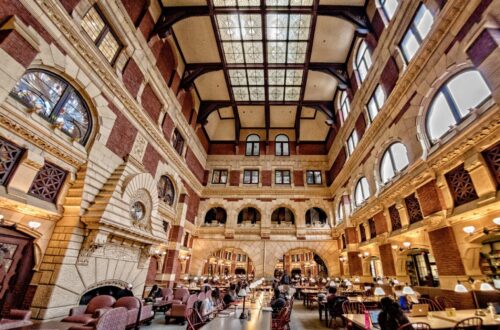


Introduction: Discovering the University of Pennsylvania 🌎🎓
The University of Pennsylvania, commonly known as Penn or UPenn, is one of America’s most historic and influential private research universities. Located in Philadelphia, Pennsylvania, Penn combines a long tradition of scholarship with a modern approach to interdisciplinary education, research, innovation, entrepreneurship, and professional development.
Founded by Benjamin Franklin in 1740, Penn has a distinctive history. Franklin envisioned an institution that would prepare students for practical life rather than focusing exclusively on classical education. That emphasis on useful knowledge continues to influence the university’s culture today. 📚💡
Penn is also a member of the Ivy League, a group of eight highly selective universities in the northeastern United States.
The university’s campus in West Philadelphia brings together undergraduate colleges, graduate schools, research centers, libraries, laboratories, residence halls, athletic facilities, museums, dining spaces, and student organizations.
What makes Penn particularly interesting is the relationship among its different academic schools.
Students can explore the humanities and sciences while also encountering opportunities in business, engineering, nursing, communication, medicine, law, design, social policy, and other disciplines.
The university is especially known for encouraging students to connect ideas across fields.
A student interested in technology and entrepreneurship might combine engineering with business.
Someone fascinated by healthcare could explore biology, nursing, business, or health policy.
A student interested in international affairs might connect political science with economics, history, or language studies.
This interdisciplinary culture reflects the complexity of the modern world.
In this comprehensive guide, we will explore Penn’s history, academic programs, research environment, campus life, student organizations, Philadelphia location, entrepreneurship, career opportunities, global learning, financial aid, and the qualities that make the university distinctive. 💙❤️
A Historic University Founded by Benjamin Franklin 🏛️📜


Penn’s history is closely connected to Benjamin Franklin.
In the eighteenth century, Franklin promoted the idea of creating an institution that would educate students in subjects useful for public life and professional work.
The resulting institution developed into what is now the University of Pennsylvania.
This history helps explain why Penn has often emphasized practical knowledge, interdisciplinary education, and connections between academic learning and the wider world.
Over the centuries, the university expanded significantly.
New schools were created.
Research became increasingly important.
Professional education developed.
The university became connected to medicine, business, engineering, law, nursing, education, design, and other fields.
Today, Penn combines historic traditions with contemporary research.
Walking across campus illustrates this combination.
Historic buildings sit alongside modern academic facilities.
Students can study in spaces that reflect centuries of university history while working with technologies that did not exist even a few decades ago.
That contrast is part of Penn’s identity.
Academic Excellence Across Penn’s Schools 📚✨


One of Penn’s major strengths is the range of academic opportunities available within a single university.
Penn’s undergraduate education is centered around several major schools, including the College of Arts and Sciences, the Wharton School, the School of Engineering and Applied Science, and the School of Nursing.
The university also includes highly regarded graduate and professional schools.
This creates a particularly rich academic environment.
Students can focus deeply on one subject while also exploring other disciplines.
College of Arts and Sciences 🧠📖
The College of Arts and Sciences provides a broad liberal arts and sciences education.
Students can study areas such as:
- Biology
- Chemistry
- Physics
- Mathematics
- Economics
- Psychology
- History
- Philosophy
- Political science
- Sociology
- English
- Languages
- Anthropology
A liberal arts education helps students develop analytical reasoning, communication, research, and critical-thinking skills.
These abilities are useful across almost every career.
The Wharton School 💼📈
Penn’s Wharton School is one of its most internationally recognized academic divisions.
Wharton is particularly associated with business, finance, entrepreneurship, management, marketing, economics, and leadership.
However, modern business education increasingly involves other disciplines.
Technology companies require engineers.
Healthcare organizations need business strategy.
Financial institutions use data science.
Entrepreneurs need communication and design skills.
This is why Penn’s cross-school environment can be particularly valuable.
Students can combine business interests with technology, science, social science, or the humanities.
School of Engineering and Applied Science ⚙️💻
The School of Engineering and Applied Science provides opportunities in fields such as computer science, electrical engineering, mechanical engineering, bioengineering, and other technological disciplines.
Engineering education increasingly focuses on solving real-world problems.
Students may explore artificial intelligence, robotics, biotechnology, energy systems, data, materials, and digital technologies.
The ability to combine engineering with entrepreneurship can also be valuable for students interested in creating new products or companies.
School of Nursing 🩺❤️
Penn’s School of Nursing is another major component of the university.
Healthcare is inherently interdisciplinary.
Modern healthcare involves medicine, nursing, technology, psychology, economics, public policy, communication, and data.
Students studying healthcare-related subjects can therefore benefit from being part of a larger university where different disciplines interact.
Interdisciplinary Education: Connecting Different Ideas 🔗💡
One of the most distinctive features of Penn is its emphasis on interdisciplinary learning.
Many universities encourage students to explore other subjects, but Penn has particularly strong connections among its schools.
Students may pursue dual degrees, minors, coordinated programs, certificates, and other academic combinations depending on their interests and eligibility.
Imagine a student interested in healthcare entrepreneurship.
They could explore biology, business, engineering, healthcare management, and communication.
Another student interested in climate technology might combine engineering, environmental studies, economics, and entrepreneurship.
A student fascinated by artificial intelligence could study computer science while exploring philosophy, psychology, or economics.
This ability to connect disciplines can be extremely valuable.
The world’s most important problems rarely fit into one academic department.
Climate change is scientific, economic, political, and social.
Healthcare involves biology, technology, ethics, policy, and business.
Artificial intelligence raises technical, economic, legal, and philosophical questions.
Interdisciplinary education helps students approach these challenges from multiple perspectives.
Research and Discovery at Penn 🔬🚀


Research is central to Penn’s identity as a major research university.
Faculty members and students conduct research across numerous fields.
These include medicine, engineering, business, social science, biology, neuroscience, materials science, computer science, education, history, economics, and many others.
For students, a research university provides opportunities to move beyond textbooks.
Instead of only learning established information, students may participate in the process of creating new knowledge.
Undergraduate Research 🔍
Undergraduate research can take many forms.
A science student might work in a laboratory.
An engineering student might help develop a prototype.
A social science student could analyze survey data.
A history student might investigate archival documents.
A business student could study market behavior.
A nursing student might participate in health-related research.
Research teaches students to deal with uncertainty.
Sometimes experiments fail.
Sometimes evidence contradicts an initial hypothesis.
Sometimes a project produces an unexpected result.
Learning how to respond to these situations develops persistence and analytical thinking.
Penn Medicine and Health Research 🧬
Penn’s connection to medicine creates significant opportunities for research.
The broader Penn ecosystem includes the Perelman School of Medicine and Penn Medicine.
Research can span genetics, cancer, neuroscience, immunology, biomedical engineering, public health, and many other areas.
Healthcare research increasingly depends on collaboration.
Doctors, scientists, engineers, data specialists, nurses, policy experts, and business professionals may all contribute to solving a single problem.
Penn’s multi-school structure can facilitate those connections.
Innovation and Entrepreneurship at Penn 💡🚀


Entrepreneurship is a major part of Penn’s culture.
Students are encouraged to think about how ideas can become products, services, organizations, or social initiatives.
Entrepreneurship does not necessarily mean starting a traditional company.
It can also involve nonprofit organizations, social enterprises, research commercialization, community projects, and innovative educational programs.
Why Penn Is Strong for Entrepreneurs 🚀
Entrepreneurs often need multiple types of expertise.
They need to understand technology.
They need to understand customers.
They need to communicate ideas.
They need to manage money.
They need to build teams.
They need to understand markets.
Penn’s academic environment can bring these skills together.
A computer science student may build a product.
A Wharton student may develop the business model.
A design student can improve the user experience.
A communications student may develop the brand.
Together, these perspectives can transform an idea into something more complete.
Innovation Beyond the Classroom 🌟
Students can participate in entrepreneurship programs, competitions, incubators, innovation centers, mentorship opportunities, and student organizations.
These environments allow students to test ideas while receiving feedback.
Not every idea will succeed.
That is part of the learning process.
Entrepreneurship teaches students how to experiment, adapt, communicate, and continue after setbacks.
The Penn Campus Experience 🌳🏛️


Penn’s campus is one of the most recognizable university environments in Philadelphia.
Historic architecture, landscaped areas, academic buildings, libraries, residence halls, and student spaces create a traditional university atmosphere within a major American city.
Locust Walk is one of the campus’s most recognizable pathways.
Students regularly walk between classes, meet friends, participate in activities, and move between different parts of campus.
The Quad provides another iconic part of the undergraduate experience.
Historic residential spaces combine with the social environment of student housing.
Libraries 📚
Penn has several libraries serving different academic purposes.
Libraries provide spaces for quiet study, group projects, research, writing, and collaboration.
For students, libraries are more than places to find books.
They can become daily routines.
A student might spend an afternoon researching a paper, meet a friend for a study session, and return later for a group project.
Developing productive study habits is an important part of university life.
Student Organizations and Campus Community 🤝💙


Penn offers a large range of student organizations.
Students can find communities connected to:
- Academic interests
- Cultural groups
- Performing arts
- Music
- Sports
- Entrepreneurship
- Volunteering
- Student government
- Journalism
- Technology
- Politics
- Hobbies
- Community service
Joining organizations can make a large university feel more personal.
A student might arrive at Penn without knowing anyone and discover a community through a club.
Over time, that group can become a major part of their university experience.
Leadership Opportunities 🌟
Student organizations also create opportunities to develop leadership.
Students can organize events, manage budgets, recruit members, coordinate projects, and communicate with different groups.
These responsibilities teach practical skills.
Leadership is not simply about having a title.
It involves listening, planning, making decisions, accepting responsibility, and helping other people succeed.
Philadelphia: A City as Your Classroom 🏙️📚


Penn’s Philadelphia location is one of its greatest advantages.
Philadelphia is one of the largest and most historically significant cities in the United States.
Students can explore history, healthcare, finance, technology, education, government, media, arts, and nonprofit organizations without leaving the metropolitan region.
The city is also deeply connected to American history.
Places such as Independence Hall, the Liberty Bell area, museums, historic neighborhoods, and cultural institutions provide opportunities to learn beyond campus.
For students, Philadelphia can function as an extended classroom.
A history student can explore historical sites.
A business student can investigate local companies.
A public policy student can observe urban government.
A medical student can learn from a major healthcare environment.
An arts student can explore museums, theaters, galleries, and music venues.
Food and Culture 🍕🥨
Philadelphia also provides a rich food culture.
Students can explore restaurants, cafes, food markets, and neighborhood traditions.
Trying new food can become part of discovering the city’s different communities.
Transportation 🚆
Philadelphia’s public transportation system also makes it easier for students to explore different parts of the city.
This can contribute to independence.
Students learn how to navigate a major metropolitan area while balancing academic responsibilities.
Campus Traditions and School Spirit 💙❤️
University traditions create a shared identity.
At Penn, traditions can include campus events, performances, athletic competitions, student organization activities, and annual celebrations.
The university’s colors, Penn red and Penn blue, appear throughout campus.
Athletics provide opportunities for students to come together and support the Penn Quakers.
But school spirit is not limited to sports.
It can also appear at student performances, cultural events, academic competitions, alumni gatherings, and campus celebrations.
These shared experiences create memories that often remain meaningful after graduation.
Athletics and Recreation 🏀🏃


Penn is an NCAA Division I athletic institution and competes in the Ivy League.
The university has a long athletic tradition, particularly in basketball and football.
Franklin Field is one of Penn’s most historic athletic venues.
It has hosted generations of students and athletes and remains an important part of the university’s identity.
For students who are not varsity athletes, recreational opportunities are also available.
Fitness centers, intramural sports, club teams, and other activities can help students remain active.
Physical activity can be an important complement to demanding academic work.
Student Wellness and Personal Balance 🧘♀️🌿
College can be exciting, but it can also be challenging.
Students may face academic pressure, career uncertainty, social changes, financial concerns, and personal responsibilities.
A healthy university experience requires balance.
Penn provides resources related to counseling, health, academic support, recreation, and student well-being.
But students also need personal strategies.
Healthy habits can include:
- Maintaining regular sleep
- Eating balanced meals
- Exercising
- Taking study breaks
- Staying connected with friends
- Asking for help when needed
- Planning assignments ahead of deadlines
- Making time for hobbies
Success at university is not only about working harder.
It is also about learning how to work sustainably.
Global Learning and International Opportunities ✈️🌍
Penn’s global environment reflects the increasingly interconnected nature of education and work.
Students can explore international study, research, internships, language learning, and global academic programs.
Living or studying abroad can expose students to different perspectives.
A student might discover that assumptions they considered universal are actually shaped by their own culture.
That realization can be valuable.
International education can develop adaptability, cultural awareness, communication skills, and independence.
Global Careers 🌎
Many Penn graduates enter careers that involve international organizations, global companies, international policy, research, healthcare, education, or diplomacy.
Understanding different cultures can therefore be an important professional skill.
Career Development and Professional Preparation 💼🎯
A university education should help students prepare for life after graduation.
Penn’s career ecosystem includes advising, internships, networking, recruiting, alumni connections, professional events, and school-specific resources.
Students can explore careers before they graduate.
This is important because many students change their career plans during college.
Someone who enters university planning to work in finance might discover a passion for technology.
A student interested in medicine may become fascinated by healthcare policy.
An engineering student might discover entrepreneurship.
Career exploration helps students make informed decisions.
Alumni Network 🤝
Penn’s alumni community is extensive.
Graduates work across industries and countries.
Alumni can provide:
- Career advice
- Mentorship
- Industry knowledge
- Professional connections
- Internship information
- Graduate-school guidance
Strong professional relationships often begin with simple conversations.
Students can ask alumni about their experiences, career paths, challenges, and lessons.
Financial Aid and Affordability 💰🎓
The cost of a private university is an important consideration for students and families.
Penn offers financial aid programs intended to make the university accessible to students from different economic backgrounds.
Financial-aid policies can change, so students should consult Penn’s official financial-aid resources for current eligibility requirements, deadlines, policies, and cost information.
Families should consider the complete cost of attendance, including:
- Tuition
- Housing
- Dining
- Books
- Transportation
- Personal expenses
- Health-related costs
- Potential financial aid
Students should not rely solely on general internet estimates.
Official university information provides the most accurate current figures.
Financial planning should begin early.
Understanding available aid can help families make informed decisions rather than focusing only on the published tuition price.
Admissions: Building a Strong Penn Application 📝🎓
Penn is highly selective, so prospective students should approach the application process thoughtfully.
Academic preparation matters.
But successful applicants are not necessarily defined by one particular personality or extracurricular activity.
Students should focus on demonstrating genuine intellectual curiosity and meaningful engagement.
Academic Preparation 📚
Students should challenge themselves appropriately through rigorous courses available at their schools.
Strong academic performance demonstrates preparation for university-level work.
But grades alone do not tell the whole story.
Extracurricular Activities 🌟
Depth can be more meaningful than simply collecting activities.
A student passionate about robotics might spend years building projects.
A student interested in writing could contribute to a school publication.
Someone passionate about community service might organize sustained volunteer programs.
These experiences can demonstrate commitment and personal motivation.
Essays ✍️
Application essays provide an opportunity to communicate personality.
Instead of writing what they think an admissions officer wants to hear, students should explain what genuinely motivates them.
Specific details are often more effective than generic statements.
Why Penn?
Which academic opportunities matter?
What questions do you want to explore?
How have your experiences shaped your interests?
Thoughtful answers can help admissions readers understand the person behind the application.
Tips for Prospective Penn Students 🔍🎓
Students considering Penn should investigate the university carefully.
Do not make a decision based only on rankings or reputation.
Research Academic Programs
Explore departments, courses, faculty, research centers, and interdisciplinary opportunities.
Think about what you would actually study.
Explore Philadelphia
Consider whether you enjoy urban environments.
Philadelphia provides cultural opportunities and professional connections, but city living also involves transportation, noise, crowds, and independence.
Visit Campus
If possible, visit Penn.
Walk through the Quad.
Explore Locust Walk.
Visit libraries.
See student spaces.
Imagine your everyday routine.
Talk to Current Students
Current students can provide perspectives that official brochures cannot.
Ask about:
- Workload
- Campus culture
- Housing
- Clubs
- Professors
- Philadelphia
- Social life
- Research
- Career preparation
Hearing multiple perspectives can help you develop a more realistic picture.
Making the Most of Penn Life 🌟
Students can make their Penn experience more meaningful by taking advantage of opportunities beyond required classes.
Try a course outside your major.
Join an organization.
Attend a lecture.
Visit a museum.
Participate in research.
Talk with professors.
Explore Philadelphia.
Apply for an internship.
Volunteer.
Study abroad.
Meet students from different backgrounds.
The goal is not to do everything.
It is to discover what matters to you.
Some of the best university experiences happen unexpectedly.
A casual conversation can lead to a research opportunity.
A club meeting can lead to a lifelong friendship.
An elective course can change your career plans.
A professor’s recommendation can introduce you to a new field.
Being open to these possibilities is part of the university experience.
The Future of Penn 🚀🌎
Higher education is entering a period of rapid transformation.
Artificial intelligence is changing research and work.
Biotechnology is creating new medical possibilities.
Climate change is creating complex social and scientific challenges.
Globalization is connecting economies.
Entrepreneurship is changing how companies are created.
Penn’s interdisciplinary structure gives it a strong foundation for responding to these developments.
The university can bring together experts from business, engineering, medicine, nursing, science, social sciences, humanities, and design.
That combination is increasingly valuable.
Consider artificial intelligence.
Building an AI system requires technical knowledge.
Using it responsibly requires ethical thinking.
Commercializing it requires business expertise.
Communicating its impact requires media and communication skills.
Regulating it requires legal and policy knowledge.
Educating people about it requires educators and social scientists.
The future will belong not only to specialists but also to people who can connect specialists.
What Makes Penn Distinctive? 💙❤️
Penn has several qualities that make it stand out.
First, its history provides a strong tradition of practical education.
Second, its Ivy League status creates a highly selective academic environment.
Third, its professional schools provide extraordinary breadth.
Fourth, its interdisciplinary culture encourages students to combine different fields.
Fifth, its location in Philadelphia gives students access to a major American city.
Sixth, its research environment provides opportunities for discovery.
Seventh, its entrepreneurship culture encourages students to transform ideas into action.
These features work together.
A student can learn theory in class, conduct research, meet entrepreneurs, explore Philadelphia, join a student organization, and prepare for an internship—all within one university environment.
That combination can make Penn particularly attractive to students who want flexibility.
Final Thoughts: Why the University of Pennsylvania Continues to Inspire 🎓💙❤️
The University of Pennsylvania is more than a historic Ivy League institution.
It is a community built around ideas, discovery, practical education, research, collaboration, and opportunity.
From Benjamin Franklin’s original vision to today’s interdisciplinary research environment, Penn has maintained a strong connection between education and the wider world.


For students, Penn can offer a remarkable combination of academic possibilities
You can study literature and business.
You can combine engineering with entrepreneurship.
You can explore biology and healthcare.
You can investigate economics and public policy.
You can study technology while thinking about ethics.
You can conduct research while participating in student organizations.
And you can learn from Philadelphia while developing your academic interests on campus.
Ultimately, the university experience is about more than a degree.
It is about becoming a better thinker.
It is about learning how to communicate.
It is about meeting people who challenge your assumptions.
It is about discovering new interests.
It is about learning from failure.
It is about developing independence.
And it is about finding ways to use your knowledge to contribute to society.
For students who are intellectually curious, ambitious, collaborative, and interested in connecting different fields, the University of Pennsylvania can provide an extraordinary environment for growth and discovery. 🌎💡
Explore deeply. Think boldly. Connect ideas. Create opportunities. And make your Penn journey meaningful. 💙❤️🎓✨
UPenn at a Glance 📌
- Full name: University of Pennsylvania
- Common names: Penn / UPenn
- Founded: 1740
- Founder associated with the institution: Benjamin Franklin
- Location: Philadelphia, Pennsylvania
- Type: Private research university
- Athletic conference: Ivy League
- Mascot: Quaker
- School colors: Penn red and Penn blue
- Academic strengths: Business, engineering, medicine, nursing, arts and sciences, social sciences, technology, research, and interdisciplinary education
- Campus setting: Urban university campus in Philadelphia
- Known for: Interdisciplinary education, research, entrepreneurship, professional schools, and connections with Philadelphia