Education is no longer limited to a physical classroom, a teacher standing in front of a board, and students following the same timetable every day. The growth of the internet, smartphones, digital platforms, artificial intelligence, and interactive learning tools has created new ways to study.
At the same time, traditional classrooms continue to provide something digital education cannot completely reproduce: direct human interaction, immediate social connection, and a structured learning environment.
The debate is therefore not simply about whether online learning or traditional classrooms are better. The more useful question is how both approaches are changing education and how they can complement one another.


🌐 What Is Online Learning?
Online learning refers to education delivered primarily through internet-connected digital platforms. Students can attend live virtual classes, watch recorded lectures, complete digital assignments, participate in online discussions, take quizzes, and access electronic books and other resources.
The flexibility of online education is one of its defining characteristics. A student may be able to study from home, a library, or another suitable location rather than traveling to a campus.
Online courses can also connect learners with teachers and institutions outside their immediate geographic area.
For working adults, university students, professional learners, and people who need flexible schedules, this can make education more accessible.
🏫 What Makes Traditional Classrooms Different?
Traditional classrooms bring students and teachers together in the same physical environment.
Students generally follow a structured timetable, attend lessons at a particular location, interact directly with teachers, and participate in classroom activities with their peers.


This model provides a clear separation between study and other activities. For many learners, physically attending class creates a routine that encourages concentration and regular participation.
It also creates opportunities for spontaneous questions, face-to-face discussions, group activities, and social interaction.
⏰ Flexibility: A Major Difference
One of the clearest differences between online and traditional education is flexibility.
Online learning can allow students to choose when and where they study, particularly when courses provide recorded lessons and self-paced materials.
A student who works during the day may be able to complete lessons in the evening. Another student may review a difficult lecture several times rather than relying on a single classroom session.
Traditional classrooms generally operate according to fixed schedules. Students must attend lessons at designated times and locations.
However, this structure can also be beneficial. Fixed schedules can encourage consistency and reduce the temptation to postpone learning.
👩🏫 Teacher-Student Interaction
Traditional classrooms offer immediate face-to-face interaction. A teacher can observe students’ reactions, notice confusion, answer questions immediately, and adjust an explanation during a lesson.
Online education can also provide interaction through video conferences, discussion boards, messaging systems, and virtual office hours.
However, digital communication can feel different from being physically present in the same room.
The quality of interaction therefore depends heavily on course design, technology, class size, teacher engagement, and student participation.
🧠 Different Approaches to Learning
Students do not all learn in exactly the same way.
Some learners benefit from independent study and enjoy controlling the pace of their education. Online learning can provide this flexibility through recorded lectures, interactive exercises, digital notes, and personalized resources.
Other students benefit from structure and direct supervision. A traditional classroom can provide a regular routine and an environment where students are surrounded by peers who are also learning.
This is one reason blended learning has become increasingly interesting. It combines digital resources with face-to-face education rather than treating the two models as completely separate systems.
💻 Technology Is Changing Both Models
Technology is not limited to online education.
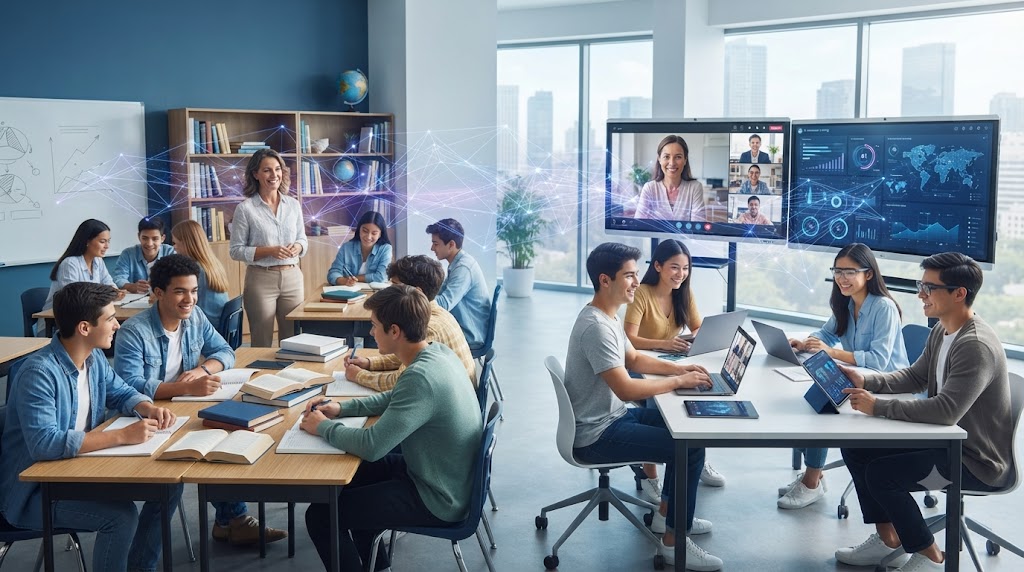
Traditional classrooms are also becoming increasingly digital. Interactive displays, educational applications, tablets, digital textbooks, learning-management systems, virtual laboratories, and AI-powered tools are being incorporated into physical classrooms.


This means the distinction between online and traditional education is becoming less clear.
A student might sit in a physical classroom while using an online platform to complete an assignment, participate in a digital simulation, or receive additional practice.
🤖 Artificial Intelligence Is Adding Another Layer
Artificial intelligence is creating new possibilities for both online and classroom education.
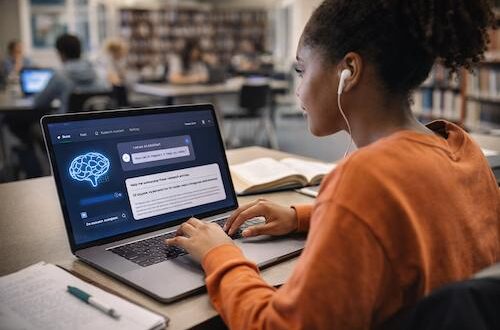
AI-powered systems can help generate practice questions, provide explanations, offer writing feedback, assist with language learning, and support personalized study.
For teachers, AI can help with certain administrative and instructional tasks.
However, AI also creates challenges. Students need to distinguish between using technology as a learning aid and using it as a substitute for their own thinking.
Education in the coming years will therefore require stronger AI literacy. Students need to know how to question AI-generated information, verify important facts, and follow academic-integrity rules.
📚 Access to Educational Resources
Online education can provide students with an enormous variety of resources.
A digital course may include videos, articles, e-books, interactive exercises, discussion forums, simulations, and external educational materials.
Traditional classrooms can also provide extensive resources through libraries, laboratories, textbooks, and teacher-created materials.
The major difference is accessibility. Digital resources can potentially be accessed from many locations, provided students have the necessary devices, connectivity, and digital skills.
🌍 Education Without Geographic Boundaries
Online learning can reduce geographical barriers.
A learner does not necessarily need to live near an institution to access its digital courses. This can create opportunities for students who live far from major educational centers.
Online education can also encourage international collaboration. Students from different countries may participate in the same course, exchange ideas, and work together on projects.
Traditional classrooms generally create stronger local communities, while online platforms can make educational communities more geographically diverse.
Both environments can therefore provide valuable social experiences in different ways.
🧑🤝🧑 Social Interaction and Collaboration
Education is not only about acquiring information. It is also about developing relationships and learning how to work with other people.
Traditional classrooms naturally provide opportunities for students to communicate with classmates, participate in group discussions, work on projects, and build friendships.
Online education can offer similar opportunities through virtual group projects, video meetings, discussion forums, and collaborative documents.
However, online collaboration requires students to be more deliberate about communication. Without physical proximity, participation can sometimes become less spontaneous.
💰 Cost and Accessibility
The financial structure of education varies considerably between institutions and courses, so neither online nor traditional education is universally less expensive.
Online programs can reduce certain costs associated with transportation, accommodation, printed materials, and physical infrastructure. Some digital resources may also be available at relatively low cost.
Traditional education may involve commuting, housing, campus facilities, and other expenses, depending on the institution.
At the same time, online learning requires access to a suitable device, reliable internet, and sometimes paid software or platforms.
The digital divide remains an important issue. Technology can expand educational access, but students without reliable connectivity or suitable devices may face additional barriers.
🎯 Motivation and Self-Discipline
Online learning can provide freedom, but freedom requires responsibility.
Students studying independently may need to create their own schedules, manage distractions, track deadlines, and maintain motivation without the physical presence of a teacher.
Traditional classrooms provide more external structure. Scheduled lessons, attendance requirements, classmates, and direct teacher supervision can encourage regular participation.
For this reason, successful online learning often depends on strong time-management and self-regulation skills.
📝 Assessment Is Changing
Traditional education has historically relied heavily on classroom tests, examinations, homework, presentations, and teacher observation.
Online learning has expanded the range of digital assessment methods.
Students may complete online quizzes, interactive assignments, digital portfolios, projects, recorded presentations, and collaborative tasks.
Technology can also provide immediate feedback in certain types of activities.
However, assessment remains a complex issue. Educational institutions need methods that measure genuine understanding while maintaining academic integrity, particularly as AI tools become more accessible.
🧑💻 The Rise of Blended Learning
One of the most important developments is the growth of blended learning.
Blended education combines face-to-face instruction with digital learning resources. A teacher might introduce a concept in the classroom, provide an online lesson for additional explanation, and then use classroom time for discussion and practical activities.
This approach can make classroom time more interactive while allowing students to review digital resources independently.


Rather than asking students to choose between physical and digital education, blended learning recognizes that both can serve different purposes.
👨🏫 How Teachers’ Roles Are Changing
Digital education does not remove the importance of teachers.
Instead, teachers increasingly act as mentors, facilitators, learning designers, discussion leaders, and guides.
Technology can provide information, but teachers help students understand how to use that information.
A teacher can encourage curiosity, identify misunderstandings, support struggling learners, organize collaborative activities, and connect academic concepts with real-world situations.
The human relationship between teacher and student remains an important part of education.
📱 The Importance of Digital Literacy
As education becomes more technology-driven, students need more than basic computer skills.
Digital literacy includes the ability to search for reliable information, evaluate online sources, protect personal information, communicate appropriately, understand digital tools, and use AI responsibly.
These skills are increasingly relevant beyond education because many workplaces also depend on digital technologies.
🌱 The Future: A More Flexible Education System
The future of education is unlikely to be defined by a simple transition from traditional classrooms to online learning.
Instead, education is likely to become more flexible.
Some students may learn primarily in physical classrooms. Others may complete online programs. Many will experience a combination of classroom teaching, digital resources, practical activities, and independent study.
Technology will continue to influence how lessons are delivered, how students practice, and how teachers monitor progress.
But educational goals will remain broader than technology itself.
Students still need critical thinking, creativity, communication, collaboration, problem-solving, curiosity, and the ability to apply knowledge.
🔮 What Students Should Expect
Students entering education today can expect greater variety in how learning is delivered.
They may encounter AI-powered study tools, interactive digital platforms, virtual collaboration, recorded lessons, personalized practice, online assessments, and traditional classroom activities.
The most useful approach is to become comfortable with both digital and physical learning environments.
Students can build strong study habits by learning how to manage their time, participate actively, ask questions, verify information, and use technology as a tool rather than relying on it completely.
🎓 Conclusion
Online learning and traditional classrooms represent two different approaches to education, but the boundary between them is becoming increasingly blurred.
Online education offers flexibility, broad access to digital resources, and opportunities for learning beyond geographic boundaries. Traditional classrooms provide structure, face-to-face interaction, social experiences, and direct teacher support.
Neither model needs to completely replace the other.
The emerging educational landscape is increasingly about combining the strengths of technology with the strengths of human teaching. As digital tools become more sophisticated, successful education will depend not simply on having better technology but on using it thoughtfully to help students understand, practice, collaborate, and grow.
🔎 Meta Description
Explore how online learning and traditional classrooms are changing education, including flexibility, technology, AI, teacher interaction, blended learning, and the future of learning.
🔗 Suggested Slug
online-learning-vs-traditional-classrooms
🏷️ Tags
Online Learning, Traditional Classrooms, Education Trends, Future of Education, Digital Learning, E-Learning, Blended Learning, Hybrid Education, AI in Education, EdTech, Online Education, Classroom Learning, Students, Teachers, Digital Education